Free Blackjack in New Zealand: Rules and Practice
 Available in US
Understand how hand values and choices shape play, and explore free ways to practise blackjack online.
Table of Contents
- Blackjack Rules That Shape Every Hand
- Playing Blackjack Online: RNG Games and Live Dealers
- Free Bets, Payouts and the Cost of Bonus Conditions
- Playing for Fun: Solo and Multiplayer Blackjack
- Free Blackjack in New Zealand: What Changes in 2026
- No-Download Blackjack and Registration Choices
- Using a Free Blackjack Simulator to Practise Decisions
- Free Blackjack Without a Deposit: Keep Play Within Limits
- Practising Blackjack Strategy Without Chasing a System
- Unblocked Blackjack: Check the Setting Before You Play
Blackjack Rules That Shape Every Hand
Blackjack is a contest between you and the dealer, not a competition to collect as many cards as possible. Your aim is to finish with a hand closer to 21 than the dealer’s without going over that total. If your cards add up to more than 21, your hand is bust, and it cannot win against the dealer’s hand. A total below 21 is not automatically a winning one: the dealer’s result still matters.
That simple aim makes each card useful in context. Number cards count at their face value, while jacks, queens and kings each count as 10. An ace can be worth 1 or 11, depending on which value helps the hand without pushing it over 21. For instance, an ace with a 7 can be read as 8 or 18. If another card would make the higher total exceed 21, the ace can count as 1 instead. This flexibility is why an ace-containing hand can change character as cards are added.
The total is the hand’s value, but the decision is yours at each point where the rules allow a choice. You can ask to hit, which means taking another card, or stand, which means keeping your current total and ending your turn. Hitting can improve a low total, but it can also take you past 21. Standing avoids that immediate risk, though it leaves the dealer to determine whether your total is enough. Neither choice guarantees a favourable result; the cards already in your hand and the total you are trying to improve are what matter.
You can also double down or split when the hand and table rules permit. Doubling down means increasing your original wager in exchange for taking a further card and then standing. Because the hand ends after that card, the decision is more restrictive than an ordinary hit: you are accepting a fixed next step rather than keeping the option to draw again. Splitting applies when your first two cards form a pair. The pair becomes two separate hands, each played against the dealer, so the decision creates a new hand to manage rather than simply changing the total of the first one. The available actions can depend on the table’s rules, so check what the game permits before making a choice.
These options are easiest to understand as different ways of managing uncertainty. Hitting keeps the hand open and can move a total towards 21, but adds the possibility of going bust. Standing protects the existing total from further cards, while leaving the outcome dependent on the dealer. Doubling down commits you to one more card and a larger wager. Splitting turns a pair into separate hands, each with its own outcome. The choices are not interchangeable, even when they may initially look like different routes to the same target.
It helps to separate what you control from what you do not. You choose whether to take another card or keep your total, and whether to use an available doubling or splitting option. You do not choose which card appears next. A sound understanding of the rules is therefore about knowing what each action means, not assuming it will produce a particular result. A small total may feel as though it needs improvement, but a hit can still overshoot. A higher total may feel settled, but it can still lose if the dealer finishes closer to 21 without going over.
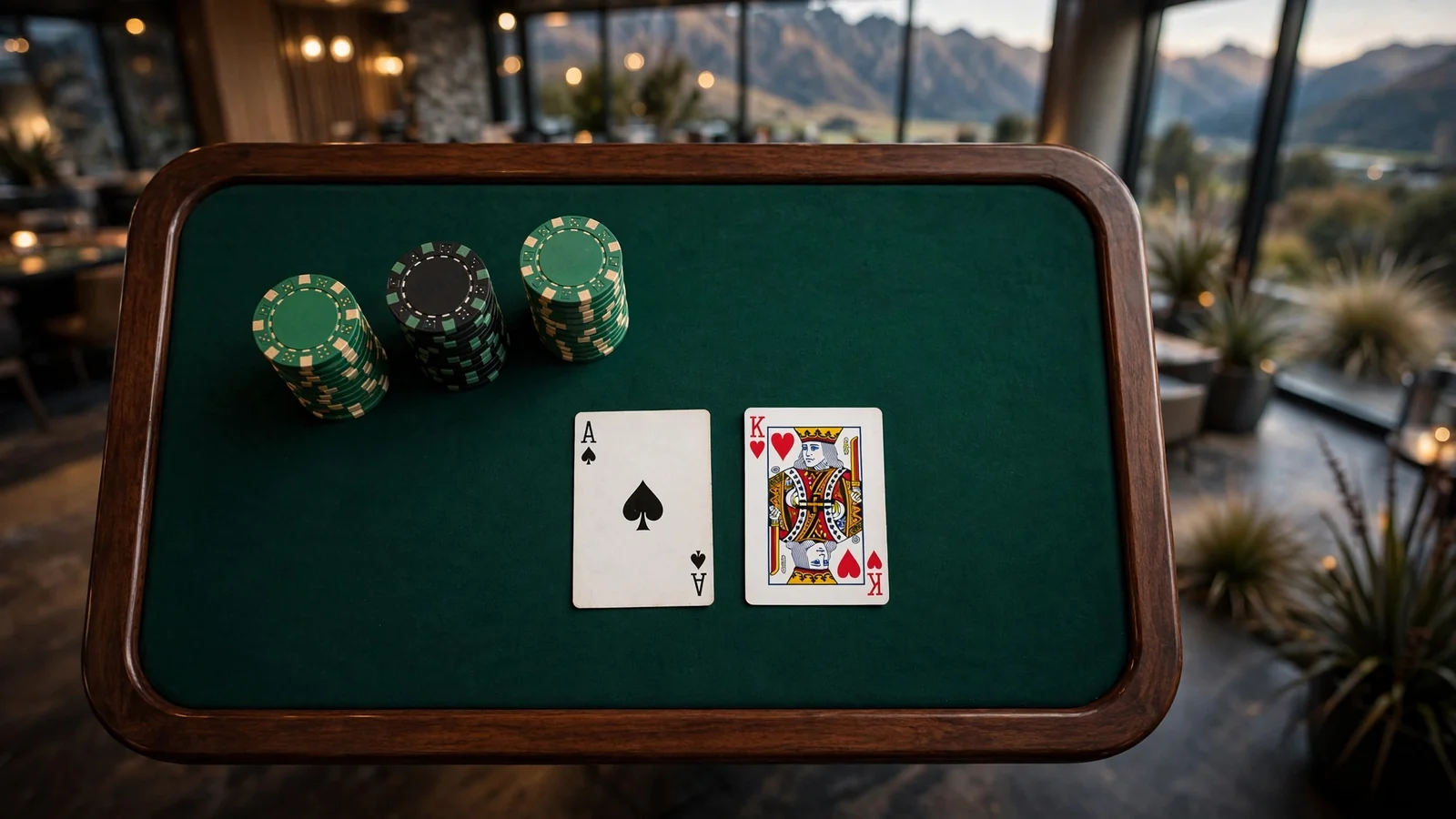
When learning with a free blackjack game, focus first on reading the hand correctly. Add the number cards at face value, count each face card as 10, and check whether an ace can be treated as 11 or needs to count as 1. Then identify which decisions are available and what each one commits you to. This keeps the basic process clear without confusing a choice with a promise of success.
A blackjack card game is built around a short sequence of decisions, but the value of a hand can shift as cards are added. Understanding the aim, the card values and the meaning of each action gives you a firm basis for following a hand. Once those rules are clear, a result is easier to understand: you can see whether it came from your total, the dealer’s total, or a hand that went over 21.
Playing Blackjack Online: RNG Games and Live Dealers
Online blackjack can look similar on screen while feeling quite different to play. The main distinction is how the cards are dealt: an RNG game uses software shuffles, while a live-dealer game shows actual cards being dealt at a table. That difference affects the pace and the kind of experience you get, including when you are playing for free.
Software-shuffled RNG blackjack
In an RNG game, software handles the shuffle and produces the cards for each hand. You play through the game interface rather than watching a physical dealer handle cards. Because there is no live table stream to follow, hands can move faster than they do in a live-dealer game.
That quicker pace can suit you if you want to play a short session or focus on the game without waiting for a live table. It can also make free blackjack play feel more continuous: you can move from one hand to the next at the software game’s pace. If you are looking for blackjack online for free, check whether the particular game offers a free-play mode; availability can differ between games and platforms.
The speed is worth considering, not just treating as a convenience. More hands can pass in a shorter period, so it helps to pause if you find yourself clicking through without paying attention. A free game can let you experience the software format without staking money, but it does not change the pace built into the game. Set a stopping point for the session and take a break when play stops feeling deliberate.
A blackjack game online in free play mode may use the same software-based format as its real-money counterpart, but do not assume that every version works identically. The interface and table rules are separate things to check. If you are comparing versions, read the game’s own information rather than relying on its title alone. A name such as European blackjack or Blackjack Switch signals a variant, but the name by itself does not tell you every rule that applies.
Live-dealer blackjack
Live-dealer games use actual cards, with the table shown through a stream. Watching a real dealer deal can make the experience feel closer to sitting at a casino table than playing against software. The streamed format also means the game has to accommodate what is happening at the table and what you see on screen.
That can introduce a delay. The stream may take time to show the action, and the game cannot move along like a software-shuffled version. If you prefer to watch each hand unfold, this slower rhythm may be welcome. If you want a quick session, it may feel less suited to you. Streaming quality and the table’s pace are part of the experience, not merely details around the game.
Live-dealer tables may also require higher bets than other online versions. That matters even if you are mainly interested in the format: a table that looks appealing may not suit the amount you intend to risk. Check the displayed conditions before joining, and do not treat a live table as the only way to get a more realistic-feeling game. A free-play option may not be available for every live table.
Choosing between the formats
If your priority is speed, software-shuffled RNG blackjack is the clearer fit: it allows faster play than live-dealer blackjack. If you value seeing actual cards dealt and prefer a table setting on screen, a live dealer may be more engaging, with the trade-off of streaming delays and potentially higher bets.
Faster pace with software shuffles, ideal for short sessions or continuous free play.
Real cards and streamed tables for a realistic casino feel, though with slower rhythms and potential delays.
For free blackjack games, look at what the mode actually provides. A software game in free play can offer a way to experience its interface and pace without making a wager. A live stream, where free access is offered, still follows the slower rhythm of a table and may carry conditions that differ from a software game. Avoid assuming that “free” means every format, table or feature is available without restriction.
There is no need to choose one format for every session. You might prefer a faster software game when you have limited time and a live table when you want to watch cards dealt. The useful comparison is not which one is universally better, but whether its pace and presentation suit what you want from that particular session. If you feel rushed by a fast interface, slow down or stop; if a stream is delayed, do not let the wait pressure you into making a decision just to keep up.
Free Bets, Payouts and the Cost of Bonus Conditions
A free bet can mean promotional credit used to place a blackjack wager, rather than cash you can withdraw directly. The offer’s terms determine how the credit works: whether the original stake is returned, how winnings are treated, and what you must do before any eligible balance can be withdrawn. Read those conditions before accepting, not after a hand has been played.
Blackjack payouts are not identical at every table. One specialist review reports natural blackjack payouts of 3:2 at some tables and 6:5 at others. Treat these as examples of differing table rules, not as a promise about what a particular game pays. Check the payout shown in the game information, and confirm whether the bonus terms treat a natural blackjack or other winning hand differently from an ordinary win.
Check the conditions before you play
The key issue is often how blackjack contributes to wagering requirements. A game may count differently from other casino games, or may be excluded from a promotion altogether. If the contribution is limited, play can take longer to satisfy the terms than the headline offer suggests. The terms should make clear how blackjack is treated; if they do not, ask the operator for an explanation before opting in.
Look for the maximum-bet rule as well. Promotions may restrict the stake you can place while wagering requirements apply. Exceeding that cap can put the bonus or associated winnings at risk, even if the hand itself wins. Check whether the restriction applies to each hand and whether it covers bonus credit as well as cash in your balance.
Also establish when the offer ends, which blackjack games qualify, and whether you need to activate the promotion before playing. These details can change the practical value of an exclusive free bet. Do not assume that an offer labelled for blackjack applies to every table or variant; the game list and conditions are what matter.
A free bet is not a payout forecast
A free bet blackjack payout depends on the game’s table rules and on the promotion’s own treatment of stakes and winnings. A displayed return or RTP describes a game’s theoretical performance over extensive play, not what you should expect from a short session or a particular bonus. It does not remove the house edge or make a promotional wager a dependable source of cash.
Check Bonus Conditions
- Confirm how blackjack contributes to wagering requirements
- Check for maximum-bet restrictions on bonus credit
- Verify the offer’s expiration date and qualifying games
- Confirm the payout rate for a natural blackjack
Insurance is not a reliable bet for most players. It is a separate choice offered in a specific situation, not a way to protect a bonus or guarantee a return. Likewise, no staking pattern or betting system can guarantee a win. A strategy cannot override the table rules or the bonus restrictions.
Before playing for real money, check the full terms on the casino’s site and set a budget you can afford to lose. If the wagering contribution, maximum bet, or payout treatment is unclear, pause rather than relying on the offer’s headline wording.
Playing for Fun: Solo and Multiplayer Blackjack
Free blackjack can be a quiet pastime when you want to play on your own, or a shared activity when a game offers a multiplayer table. The point in either setting is entertainment, not income. A free-play balance is not money you can take away, and a run of favourable results does not make a game a reliable way to earn.
Playing solo gives you room to set your own pace. You can take a break between hands, leave the game when you have had enough, or keep the session brief without needing to coordinate with anyone else. That can suit a casual evening when you want a game to focus on, rather than a financial goal to pursue. Treat the time spent as leisure, just as you would with another game: decide when you want to stop before you begin.
A multiplayer table changes the atmosphere. Other people may be playing at the same table, so each hand can feel more like a shared activity than a private session. Depending on the game, you might see other players’ decisions or have access to a chat feature. These elements can make a free table more sociable, but they do not change the fact that each player is there to play their own hand. Be considerate in chat, and do not feel obliged to keep playing because other people are still at the table.
If you are choosing between solo and multiplayer play, think about what you want from the session. Playing alone offers privacy and fewer social distractions. A shared table may be more engaging if you enjoy other people’s presence, even when you are not chatting. Neither option is inherently better; the right choice is the one that feels comfortable and remains enjoyable.
It can help to set a small boundary around free play, too. For instance, choose a point at which you will close the game or move on to something else. Free play can still absorb more attention than intended, especially if you keep restarting after a disappointing hand. Taking a pause is a sensible choice; there is no need to recover a free balance or prove that you can turn a session around.
- Set a stopping point before you begin
- Treat free play as leisure and entertainment
- Choose the setting (solo or multiplayer) that feels comfortable
- Attempt to recover a free balance after a loss
- Use free play as a plan for making money
- Feel obliged to keep playing because others are at the table
If you later consider a real-money game, treat that as a separate decision, not a continuation of a free session. A free table cannot show what it feels like to risk your own money, and success in play mode does not establish that you will profit when stakes are involved. You can enjoy blackjack online for fun without turning it into a plan for making money.
The social side should also remain optional. You do not owe other players conversation, and their pace or comments do not need to set yours. If chat becomes uncomfortable, leave it or choose a solo table where that option is available. A relaxed session is one you can end without pressure.
Free blackjack games are best approached as a form of play with a clear purpose: pass some time, enjoy the company, or simply unwind. Keep that purpose in view, and choose the setting that supports it.
Free Blackjack in New Zealand: What Changes in 2026
If you’re looking for free blackjack in New Zealand in 2026, use this list as a starting point and check each site for game availability and free-play terms. The details below highlight only the information available for each operator.
Payout speed: 1-3 business days Lamabet lists payouts as taking 1–3 business days. This is a useful detail to consider when reviewing the site.
License: 07017519840 · Payout speed: 1-3 business days Zotabet lists licence number 07017519840 and a payout speed of 1–3 business days. These are the available details to consider when reviewing the operator.
Payout speed: 1-3 business days Wintino lists payouts as taking 1–3 business days. This is the available detail to consider when reviewing the operator.
License: Tobique Gaming Commission, licence no. 0000002 Ricky Casino lists a licence from the Tobique Gaming Commission, licence no. 0000002. You can use this licensing information when assessing the operator.
License: Tobique Gaming Commission, licence no. 0000064 Neospin lists a licence from the Tobique Gaming Commission, licence no. 0000064. You can use this licensing information when assessing the operator.
License: Malta Gaming Authority, licence no. MGA/B2C/394/2017 N1 Casino lists a Malta Gaming Authority licence, no. MGA/B2C/394/2017. This is the available detail to consider when reviewing the operator.
License: Curaçao Gaming Authority, licence no. OGL/2024/165/0185 BitStarz lists a Curaçao Gaming Authority licence, no. OGL/2024/165/0185. You can use this licensing information when assessing the operator.
License: Tobique Gaming Commission, licence no. 0000091 7Bit Casino lists a licence from the Tobique Gaming Commission, licence no. 0000091. This is the available detail to consider when reviewing the operator.
License: Malta Gaming Authority, licence no. MGA/B2C/370/2017 Play Grand lists a Malta Gaming Authority licence, no. MGA/B2C/370/2017. You can use this licensing information when assessing the operator.
Free blackjack online may look much the same on screen as it did before, but the rules governing online casino services in New Zealand have changed. The Online Casino Gambling Act 2026 came into force on 1 May 2026, creating the country’s first domestic licensing system for online casino gambling. That does not mean every site available to New Zealanders is already licensed under the new system.
The transition period runs from 1 May to 1 December 2026. During that time, only providers that were already serving people in New Zealand before the Act took effect may continue operating under its transitional provisions. A provider that has not applied for a licence must stop offering online casino gambling in New Zealand by 1 December. If an application is refused, the provider must leave the market and cease those operations.
The full licensing regime is not expected to be operating until 2027. Until then, it is important not to treat the transition as proof that a particular online casino has received a New Zealand licence. The Gambling Act 2003 did not permit online casinos to be based in New Zealand, and before the 2026 Act, offshore casino services were not licensed or supervised by a New Zealand regulator. Customers who wagered with an offshore website in that earlier period had no domestic government recourse if a dispute arose.

Who oversees the framework?
The Department of Internal Affairs is New Zealand’s primary gambling regulator and oversees the online casino licensing framework. The Gambling Commission handles the licensing decisions: it considers casino applications and decides whether to grant them, while also deciding whether proposed changes to licence conditions can be approved.
These are distinct roles within the system. The Department provides regulatory oversight; the Commission makes decisions about applications and licence conditions. As licensing moves towards full operation, providers without a licence may face enforcement action and fines of up to NZ$5 million. Licensed operators will also have stricter age and identity verification duties.
What the transition means for free play
A free casino blackjack table does not, by itself, tell you whether the provider is authorised under New Zealand’s changing framework. Free play can be offered alongside other casino services, so consider the status of the provider rather than assuming that a no-cost game sits outside the rules.
There are also limits on promotion. Operators are prohibited from advertising to people in New Zealand during the transition period. Once licensed operators are able to advertise under the new regime, their advertising remains subject to tight rules, and sponsorships are prohibited. A promotional message should not be taken as evidence that a provider holds a licence.
The transition is a temporary arrangement, not the final licensing picture. If you are considering blackjack free online, keep that distinction in mind: access to a game and a provider’s regulatory status are separate matters. The framework is moving from a period without domestic supervision of offshore services towards New Zealand licensing, but full operation is not expected until 2027.
Licensing Warning
Providers without a licence may face enforcement action, and you should not treat the transition period as proof that a casino is licensed under the Online Casino Gambling Act 2026.
No-Download Blackjack and Registration Choices
A browser-based blackjack game runs on a website, so you can open it without installing a separate program. That can make it simpler to try a game on a device where you cannot or do not want to add software. “No download required” describes how you access the game; it does not tell you whether you need an account, whether the game is free, or what information the site may request.
Free play without registration is possible on some sites, but the terms can differ even when the game appears similar. A site may let you start a demo immediately, ask you to register before saving preferences, or require an account for other features. Read the conditions shown on the site rather than assuming that “free” means anonymous or that registration is optional.
Downloadable freeware is a separate choice. It may be designed to run on your device after installation, rather than loading from a web page. Before downloading, check who provides the file, what permissions the installer requests, and whether the program comes from a source you trust. If anything about the source or installation process is unclear, do not proceed just to access a free game.
With browser play, pay attention to the page address and the information requested before entering details. A request for personal information should have a clear purpose described in the site’s terms or privacy notice. Consider whether you are comfortable sharing those details, and avoid providing information simply because a game is labelled free. If the terms are hard to find or do not explain how your information is handled, you can leave without registering.

Take particular care before moving from a free game to real-money play. Registration may involve additional terms, identity checks, and rules about how the account can be used. Read those conditions before submitting details or making a payment; do not treat access to a free game as agreement to later terms.
The method of access is also separate from the pace of play. Online RNG blackjack uses software shuffles and can move faster than a live-dealer game, whether you open it in a browser or through installed software. A no-download label is therefore about installation, not a promise that play will be slower, safer, or free of conditions. Check what the site offers before you continue.
Using a Free Blackjack Simulator to Practise Decisions
A free blackjack simulator can turn casual play into focused practice. Instead of clicking through hands without much thought, use each round to examine a decision: what information did you have, which action did you choose, and what would make you choose differently next time? The aim is to build a consistent way of thinking, not to predict the next card or find a shortcut to winning.
Before starting, check the table rules shown in the game. Blackjack variants can differ, and those differences can affect both strategy and the house edge. A decision that makes sense under one set of rules may not be the best choice at another table. Pay attention to the rules the simulator actually uses rather than assuming every version follows the same approach.
Practise Decisions
Check the table rules in the simulator, as variants affect strategy and house edge.
Pause before acting to note your total, the dealer’s visible card, and your intended action.
Make the choice and record any uncertainty, treating the result as one outcome rather than absolute proof of the decision’s quality.
You can practise deliberately by pausing before each decision. Note your hand, the dealer’s visible card and the action you are considering. Make your choice, then record what you were unsure about. If the simulator does not explain whether a decision was strategically sound, treat the result of the hand as just one outcome, not as proof that your choice was right or wrong. A good decision can still be followed by an unfavourable result.
For more useful sessions, work on one question at a time. You might focus on how a particular hand changes when the dealer’s visible card changes, or compare your choices at tables with different rules. Keep brief notes so you can spot repeated hesitation or assumptions. Avoid changing your approach simply because a short run of hands went well or badly.
Free blackjack play can help you become more familiar with the flow of decisions, but it cannot guarantee that you will make money later. A simulator may also simplify the experience or offer a version whose rules differ from a game you encounter elsewhere. Treat practice as a way to understand your choices, not as evidence that a particular system will overcome the game’s edge.
If you move from practice to real-money play, stop and review your limits before continuing. Familiarity with a simulator does not remove the financial risk of playing for money.
Free Blackjack Without a Deposit: Keep Play Within Limits
Free blackjack without a deposit can let you try a game without transferring money or placing cash bets. Look for a clearly marked free-play option and confirm that the table is not using real-money funds before you start. A game displayed in a browser may still offer a route into paid play, so pause if a deposit prompt appears and decide whether you want to continue.
Treat free play as entertainment, not as a way to build a balance you can later withdraw. Virtual chips have no cash value unless the site clearly says otherwise, and free access does not make every offer or feature risk-free. Read the terms before sharing personal details or accepting anything connected to real-money play. If you only want to try blackjack, you can leave when the free session ends.
The important boundary comes if you choose to move from free play to gambling with money. Set a budget beforehand: an amount you can afford to lose without affecting bills, food, savings or other essentials. Keep that money separate from funds you need for daily life, and stop when the budget is gone. Do not add more to recover losses or extend a session because a win seems close.
A free game can make the move to paid play feel familiar, but it cannot tell you what you can afford or make results predictable. Before depositing, check the site’s terms and consider whether you are comfortable with the possibility of losing the full amount you set aside. If that possibility feels difficult to accept, stay with free play or step away.
You can also close the game without turning a free session into a financial decision. If you notice yourself returning to spend more than planned, take a break and seek support. Gambling Helpline NZ is available for people who want help setting boundaries or talking through concerns. Free blackjack can remain just that: a way to pass time without putting your money at stake.
Practising Blackjack Strategy Without Chasing a System
A useful strategy is a set of decisions matched to the rules in front of you, not a formula that promises to beat every table. When you practise blackjack online for free, treat each hand as a chance to check whether your choice fits that game’s conditions. A free blackjack strategy card can be a reminder, but it is only useful when it matches the variant you are playing.
Before practising, check the table details. The deck count, the dealer’s decision on a soft seventeen, whether surrender is allowed and the blackjack payout can all differ. A specialist review also notes that these conditions vary across games; they matter because blackjack variants can change both strategy and the house edge. A decision aid built for one set of rules may point you toward a different choice at another table.
Keep a simple record of the rules and the decisions you want to practise. For instance, note whether the dealer takes another card on a soft seventeen, then review how your choices change under that rule. This makes practice more deliberate than repeating hands without checking what the table requires. Do not mistake a short run of favourable results for proof that a strategy is working: individual outcomes can vary, and no system guarantees a win.
Card counting relies on keeping track of cards already seen. Mental calculation alone is not illegal under New Zealand law, but that does not make it a dependable way to gain an edge online. Where cards are shuffled again by software, a mental count cannot reliably tell you what cards will come next. Keep your focus on decisions you can actually practise: reading the table rules, applying a suitable strategy and noticing when a different variant calls for a different approach.
Free blackjack practice money, where offered, should not be confused with a reliable way to earn or with proof that a betting system works. Use practice to learn the effect of rule changes and build consistent decision-making, rather than chasing a method that claims to remove uncertainty.
Unblocked Blackjack: Check the Setting Before You Play
A request for unblocked blackjack can mean you want a free game that opens in a browser, particularly on a device with network restrictions. Before you start, consider where you are and who manages the device or connection. A school, workplace or shared network may block gaming sites under its own rules. Do not try to get around a restriction if you are not allowed to use the site there; wait until you are using a device and connection where play is appropriate.
Free play can be a way to pass time without wagering money, but it still deserves boundaries. Decide how long you want to spend before opening a game, and stop when that time is up. If you find yourself switching to real-money play, pause and set a budget you can afford to lose. Do not chase losses or treat free rounds as proof that paid play will go the same way.
Browser access and game speed are separate things. A game opening quickly in a browser does not tell you how fast each hand will run. RNG blackjack uses software shuffles and can move faster than a live-dealer table, where play depends on the streamed game. If you want a slower pace, look at how the game is presented rather than assuming that “unblocked” means quick or uninterrupted.
Keep the setting in mind, too. A screen that is visible to others may not be suitable for gaming, and a game can hold your attention longer than intended. If play is interfering with a task, a shared space or your plans for the day, close it and return only when you have time set aside for it.
The useful test is not simply whether the page loads. Choose a setting where you are permitted to play, keep free blackjack within the limits you set, and avoid turning easy access into a reason to play more than you meant to.
Prepared by the Casino Payment Info NZ editorial staff.