
Craps Gambling in New Zealand: How Bets Work
 Available in US
Craps wagers can hinge on one roll or on how results unfold across a sequence.

Table of Contents
- What a Craps Bet Is About
- Craps as a Casino Game
- Reading the Craps Table Before You Bet
- What the Two Dice Can Set in Motion
- How the Main Craps Round Resolves
- Craps Wagers Beyond the Basic Bet
- A Measured Approach to Craps Strategy
- Craps Systems and Practice Without a Wager
- Online Craps: Mobile and Live-Dealer Formats
- New Zealand’s Online Casino Rules During 2026
What a Craps Bet Is About
Craps is a dice game in which you wager on what will happen when two dice are rolled. A bet may concern the result of one roll or the outcome of a series of rolls. That is the basic idea behind craps gambling: you choose an outcome to back, while the dice determine what happens.
The distinction between a single roll and a series matters. Some wagers are settled by the next result; others depend on how results unfold over more than one roll. So a bet is not simply a prediction that one particular number will appear. Depending on the wager, the relevant question may be whether a result occurs at the right point in a sequence.
The dice are the source of the game’s uncertainty. You do not control how they land, and choosing a bet does not influence the roll. Your decision is about which possible outcome or sequence you want your wager to depend on. Once the dice are rolled, the result is compared with the terms of that bet.
Choosing a craps site in New Zealand means checking which options have relevant, verifiable details before you play. This list gives you a concise reference point for considering craps gambling in 2026.
Payout speed: 1-3 business days Lamabet lists a payout speed of 1–3 business days, a practical detail to consider when choosing where to play craps.
License: 07017519840 · Payout speed: 1-3 business days Zotabet lists licence number 07017519840 and a payout speed of 1–3 business days. These are the available details to consider when assessing it for craps.
Payout speed: 1-3 business days Wintino lists a payout speed of 1–3 business days. You can use this information as one point of reference when considering it for craps.
License: Tobique Gaming Commission, licence no. 0000002 Ricky Casino lists a licence from the Tobique Gaming Commission, licence no. 0000002. This gives you a stated licensing detail to review when considering the casino for craps.
License: Tobique Gaming Commission, licence no. 0000064 Neospin lists a Tobique Gaming Commission licence, no. 0000064. You can take this stated licence information into account when considering it for craps.
License: Malta Gaming Authority, licence no. MGA/B2C/394/2017 N1 Casino lists a Malta Gaming Authority licence, no. MGA/B2C/394/2017. This is the available licensing detail for you to review when considering craps.
License: Curaçao Gaming Authority, licence no. OGL/2024/165/0185 BitStarz lists a Curaçao Gaming Authority licence, no. OGL/2024/165/0185. You can use this information as a reference when considering it for craps.
License: Tobique Gaming Commission, licence no. 0000091 7Bit Casino lists a Tobique Gaming Commission licence, no. 0000091. This stated detail may help you assess it as an option for craps.
License: Malta Gaming Authority, licence no. MGA/B2C/370/2017 Play Grand lists a Malta Gaming Authority licence, no. MGA/B2C/370/2017. You can review this licensing information when considering the casino for craps.
This makes craps different from games where a player’s choices directly shape each move. Here, your main decision is what to wager on; the roll supplies the result. Understanding that division can help you approach the game without confusing a bet with a way to steer the dice.
If you are new to craps, it can help to think of each wager as a specific statement about the dice. It might be a statement about what happens on one roll, or about what happens across a run of rolls. The wager’s meaning comes from the outcome it refers to, not from a general hope that the dice will be favourable.
That also explains why the name of a game alone does not tell you what a particular bet means. Craps includes different ways to base a wager on the dice, and the relevant outcome can vary with the choice you make. Before staking money, it is worth being clear about what event your bet is tied to and whether it concerns one roll or a sequence. If that is not clear, pause and ask for the wager to be explained before you place it.
In short, craps gambling means risking a stake on the outcome of two dice, either at a single point or over a series of rolls. The bet sets the event that matters; the dice decide whether it occurs. Keeping those ideas separate gives you a sound starting point for understanding the game, without assuming that every wager works in the same way.


Craps as a Casino Game
Craps is a casino game presented as a table experience rather than as a single wager. The distinction matters: “craps” describes the game, while a bet is a particular choice made within it. A casino may offer the game in a physical table setting or through a live casino format, but that label alone does not tell you which betting options are available or how a round is run.
A specialist casino review reports that craps appears in both table-game and live-casino form across many sites serving New Zealand players. Treat that as a description of reported availability, not a guarantee that a particular platform currently offers the game. Casino catalogues can change, and the format shown on one service may differ from another. No operator needs to be assumed or named to understand the distinction.
At a physical casino table, the game is organised around a shared playing area and a person designated as the shooter, who rolls the dice. In a live casino presentation, a camera stream can bring a dealer-led table to a remote screen. The atmosphere and interface differ, but these are ways the casino presents the game; they do not change the basic idea of craps as a game involving dice and wagers. Details of mobile play and live-dealer formats are a separate consideration.
The word “table” can also be useful when sorting a casino’s game categories. Craps belongs with table games, not with slots or other games built around a different format. That classification helps you identify the kind of experience being offered, but it should not be mistaken for a description of every rule, bet or settlement. Those depend on the specific version and the wager selected, so the game’s name is not enough to infer them.
Attention: A title or thumbnail is only a starting point and does not guarantee that a game is presently accessible or establish which table rules apply.
Before treating a listing as a practical option, look at what it actually says about the format. A page may identify a live table, while another may use a broader table-game label. A title or thumbnail is only a starting point: it does not establish whether the game is presently accessible, what interface it uses, or which table rules apply. If those details are not clear, do not fill the gaps with assumptions.
This is especially important when comparing a familiar casino table game with an online listing. The underlying game category may be the same even when the surroundings are not. A physical table is a venue experience; a live casino game is a streamed presentation; and neither label, by itself, explains the choices available during play. Keeping availability separate from betting mechanics makes it easier to understand what a casino listing tells you—and what it does not.
Reading the Craps Table Before You Bet
At a craps table, the important first step is not choosing a number; it is understanding when a wager can be made. Players must place their bets before the shooter rolls the dice. That timing gives you a moment to pause, take in the activity and decide whether you understand the wager you are considering.
If you are new to craps table gambling, resist the pressure to follow the pace of other players. A busy table can make each decision seem urgent, but you do not need to place a bet simply because people around you are doing so. Watch the sequence of play first. Notice when players are making their choices and when the shooter is about to roll. Once the dice are in motion, the opportunity to place a wager for that roll has passed.
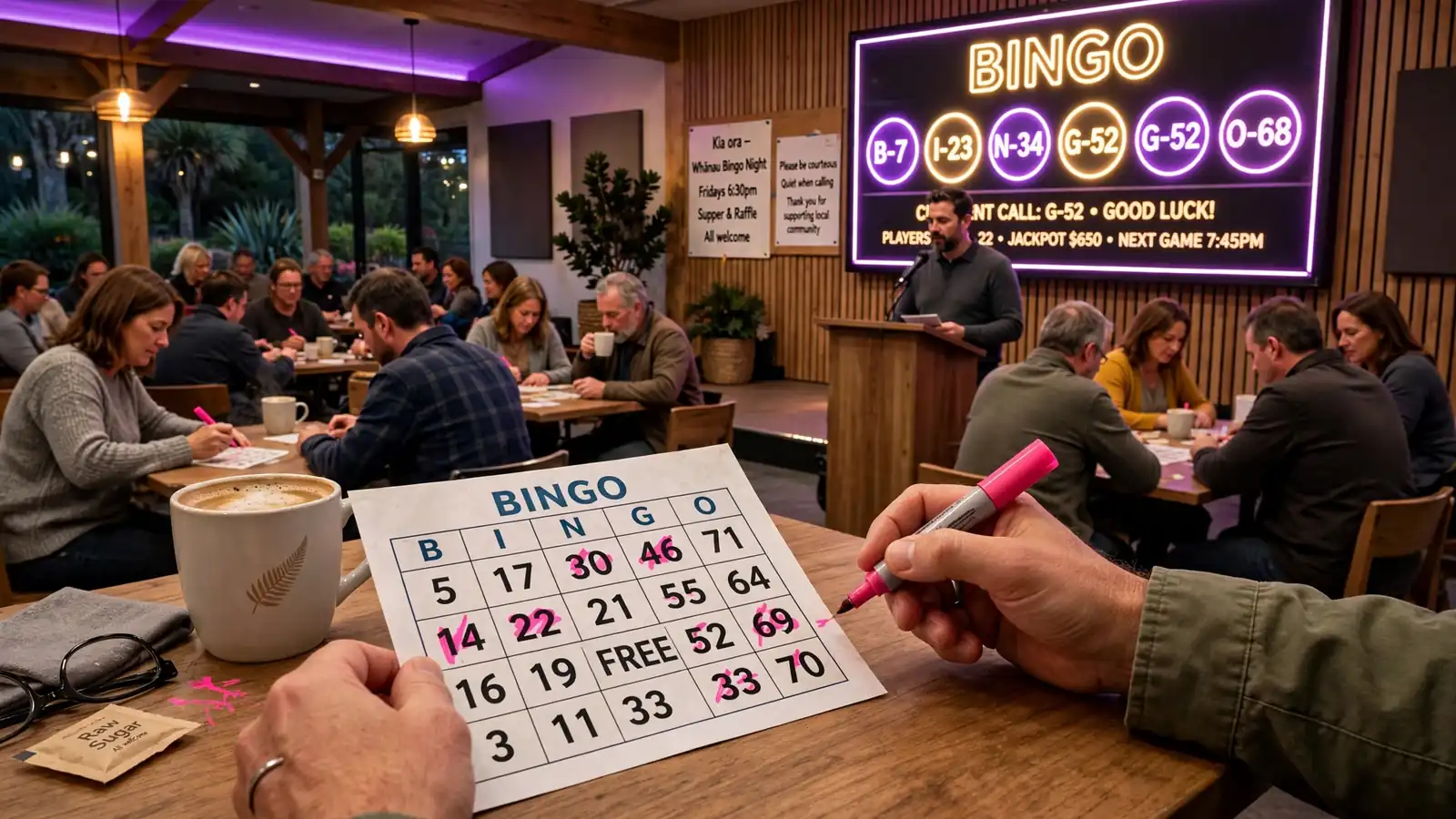
It helps to keep observation separate from participation. Watching a round lets you become familiar with the rhythm without putting money at stake. Pay attention to how the table moves from one roll to the next, and to the point at which players stop placing bets and the shooter rolls. You can learn that sequence without trying to interpret every action or copy another player’s choices.
When you are ready to take part, make your decision before the shooter rolls, rather than waiting to see what happens. A bet is a commitment to a possible outcome, not a way to respond to the result after it is known. If you are uncertain about what a wager means or whether it is still being accepted, pause and ask the table staff before committing. It is better to understand the choice than to rely on a guess made in the moment.
The table can feel fast because several players may be acting within the same round. Keep your attention on your own decision and the timing of the roll. Other players’ bets do not tell you what the dice will do, and a confident-looking choice from someone else does not remove the risk from yours. You are not required to match the group’s pace or stake simply because the table is active.
- Watch the sequence of play first
- Make your decision before the shooter rolls
- Ask table staff if a wager is unclear
- Place a bet simply because others are
- Follow the pace of a busy table
- Try to wager after the dice are in motion
A useful way to approach the betting stage is to decide in advance whether you want to participate in the upcoming roll. If you do, make the wager before the shooter rolls and be clear about what you have chosen. If you are not ready, continue watching rather than rushing into a decision. This keeps the sequence straightforward: consider the bet, place it before the roll if you choose, then let the shooter roll.
The layout may draw your eye, but familiarity with the order of play matters more than trying to read every part of the table at once. Start by following the timing. Once you know when a decision must be made, you can approach gambling at a craps table more calmly and avoid treating a wager as something that can be added after the result is visible.
What the Two Dice Can Set in Motion
The first roll of a craps round is called the come-out roll. Its total places the result in one of three categories: a natural, craps, or a point. Knowing these names helps you follow what the dice have set in motion without confusing a roll’s category with the wagers that may be affected by it.
A natural is a total of 7 or 11. The name may sound as though it describes a special kind of throw, but here it simply identifies those two possible totals on the come-out roll. The dice still produce a number; “natural” is the label given to the result.

Craps refers to a total of 2, 3, or 12 on that same roll. These three totals form their own category, separate from both naturals and points. When you are watching craps gambling dice, the category is determined by the total shown, not by how the dice appear to have landed or by the way a player throws them.
The remaining come-out totals are 4, 5, 6, 8, 9, and 10. Each is known as a point. The point is therefore not one single number chosen in advance: it depends on which of these totals appears. The roll establishes that number as the point for the round.
This grouping accounts for every possible total from the two dice on the come-out roll. A 7 or 11 is a natural; 2, 3, or 12 is craps; and 4, 5, 6, 8, 9, or 10 is a point. These terms describe the result, giving you a simple way to read the opening moment of play. They do not, by themselves, explain how a particular wager is settled. That depends on the bet and on the stage of the round, so keep the result categories distinct from the rules attached to individual bets.
How the Main Craps Round Resolves
A Pass Line or Don’t Pass wager is settled in stages. First comes the come-out roll, which determines whether the round ends immediately or continues with a point. The two bets respond differently to some results, so it helps to follow each one separately.
On the come-out roll, a Pass Line bet wins if the dice show 7 or 11. A total of 2, 3 or 12 means it loses. If the roll is any other total, a point is set and the round moves on rather than settling the bet at once.
A come-out roll total of 7 or 11.
A come-out roll total of 2, 3, or 12.
A come-out roll total of 4, 5, 6, 8, 9, or 10.
A Don’t Pass bet reverses several of those opening outcomes. It wins on 2 or 3, but loses on 7 or 11. A 12 is a push: the bet is neither won nor lost on that roll. When the come-out roll is 2, 3 or 12, the Don’t Pass side wins on 2 or 3, while 12 remains the push. In those cases, the round ends.
Once a point has been established, the shooter keeps rolling. For the Pass Line, the aim is for that same point to appear again before a 7. If it does, the Pass Line bet wins. If a 7 comes first, the Pass Line bet loses. The point therefore remains central to the outcome of the round: the first roll that set it is not enough to decide the wager.
For a Don’t Pass bet after a point is set, the relevant comparison is also between the point and 7, but the winning order is reversed. The bet wins if 7 appears before the point. If the point is rolled first, the Don’t Pass bet loses.
This sequence is the core of craps gambling rules for these two wagers: the opening roll can settle a bet immediately, or establish a point that keeps the round active. Following which result comes first after that makes clear why the same series of rolls can favour one side and defeat the other.
Craps Wagers Beyond the Basic Bet
Once a point has been set, you can consider wagers that give you another way to follow the numbers. A Come bet is one option. It begins after the point is established, rather than joining the original Pass Line wager. Its first result is decided by the next roll, so it creates a separate sequence of its own.

If that next roll is 7 or 11, the Come bet wins. A roll of 2, 3 or 12 makes it lose. If the dice show 4, 5, 6, 8, 9 or 10 instead, the wager is moved to the corresponding number. That number then becomes the focus: the Come bet wins if it appears again before a 7. If 7 comes first, the bet loses.
This movement can be useful to understand before placing the wager. A Come bet does not simply stay tied to the initial roll in every case. Some results settle it immediately; the other listed results transfer it to a number that must be rolled again ahead of 7. You can therefore have a Come bet in progress alongside the point, with each one following its own outcome.
Place bets also focus on particular numbers, but they do not begin with the same first-roll process as a Come bet. You select 4, 5, 6, 8, 9 or 10 and wager that your chosen number will appear before 7. The selected number is the target from the outset. There is no Come roll that first decides whether the wager wins, loses or moves to a different number.
The distinction is worth keeping clear when you are learning gambling craps. A Come bet can travel from its initial stage to a number based on the next roll; a Place bet is already set on the number you choose. Both involve watching for a target number before 7, but the way each wager gets there differs. That difference affects what you need to track during play, not whether either wager removes uncertainty.
Betting Beyond Basics
- Identify which number the wager follows
- Determine what result ends the bet
- For Come bets, check if it has moved to a number
- For Place bets, track the selected number and 7
Before adding either option, check that you can identify which number a wager follows and what result ends it. With a Come bet, note whether it has been resolved on its first roll or has moved to a number. With a Place bet, keep your attention on the selected number and 7. These are additional choices, not requirements for taking part in a round. You can follow the action without adding them, and you can take time to understand how each wager works before risking money on it.
A Measured Approach to Craps Strategy
A useful strategy starts with understanding what a wager can and cannot change. It can shape how you take part in a round, but it cannot make the dice predictable or remove the risk of losing. Treat each choice as a decision about the terms of your bet, not as a way to control the outcome.
Odds bets are distinctive because they carry no house edge: they pay when the point is rolled before a 7. However, the amount you can stake on Odds is limited in relation to your Pass bet. That means the bet cannot be considered in isolation; its practical effect depends on the underlying Pass wager and the limits attached to it. A zero house edge on this additional bet does not mean the overall position is risk-free, nor does it erase the edge on another wager.
The Come bet is another choice, but its cost should be part of your decision. A specialist review estimates its house edge at approximately 1.4% when it is made without Odds. That figure is not a promise about what will happen in a particular round. It describes the wager’s long-run mathematical disadvantage, not the result you should expect from a short run of rolls. Adding Odds may alter the combined wager’s mathematical profile, but the stake remains exposed to the dice, and the available amount is constrained relative to the original bet.

Before placing anything, consider whether you can explain how the bet resolves and whether you are comfortable with its exposure. Avoid raising stakes simply because earlier rolls went against you or because a win feels due. Previous results do not make a future roll more favourable. A plan that sets a spending boundary can help you notice when the session is no longer within what you intended; if that point arrives, walk away.
There is no strategy that guarantees a profit. The most grounded approach is to distinguish a wager with no house edge from a round with no risk, and to account for the edge on bets made without Odds. Keep the decision measured, and do not treat a mathematical feature as a reason to wager more than you can afford to lose.
Craps Systems and Practice Without a Wager
A craps system can give you a set of instructions to follow, such as when to place or change a wager. That structure may make decisions feel more orderly, but it does not make the dice predictable. A sequence of past rolls cannot tell you what the next roll will be, and a system cannot guarantee a win or remove the risk of losing money.
Be cautious of claims that a particular pattern, progression or staking plan can produce reliable results. A method may change how you place wagers, but it does not change the possible outcomes of a roll. If a system involves increasing stakes after losses, consider what happens if the losses continue: the approach can expose you to greater losses without ensuring that a win will follow.
Caution: Systems that involve increasing stakes after losses can expose you to greater losses without ensuring a win will follow.
You can assess a system on paper before risking money. Write down its rules, then check whether you can follow them consistently and whether they rely on predicting a specific sequence. Keep the distinction clear between a plan for managing your choices and a method that claims to forecast the dice. The first can be evaluated as a personal approach; the second should not be treated as dependable evidence.
For practice, a specialist review reports that free demo versions of craps are available to players in New Zealand without wagering NZD. A demo can help you become familiar with the pace of play and see how a chosen set of rules works in practice. It is a way to learn without placing a cash wager, not proof that a system is effective.
If you use a demo, treat its results as practice rather than a forecast of what will happen when money is involved. A run of wins or losses in a no-wager setting does not establish that the same pattern will continue. Nor does familiarity with a system make its outcomes certain. Set aside any method that encourages you to chase losses or treat a short sequence as a signal. If you decide to wager later, make that decision separately from the confidence a demo may have given you.

Online Craps: Mobile and Live-Dealer Formats
Online formats can change how you access a craps game, but they do not change the underlying dice outcomes. For New Zealand readers, mobile access and live-dealer play are reported possibilities, not features to assume are available everywhere. A specialist review reports that craps can be played on mobile devices, while live-dealer versions may also be available. Those descriptions do not establish what any particular platform offers now, or whether you can access it from your device.
Playing on a mobile device
A mobile format means accessing the game through a phone or tablet rather than a desktop computer. The practical question is whether the particular game and platform can be opened on your device; the fact that mobile craps has been reported does not guarantee compatibility with every device or operating system. Nor does it establish that a dedicated app is needed or available. Avoid treating a general description of mobile play as confirmation of a specific app, feature or service.
A small screen can also make it harder to follow a table layout and see the information displayed during play. Before engaging with a game, take time to understand what is shown on screen and how the interface presents your choices. If controls or labels are unclear, do not place a wager while trying to work them out. The interface is only a way to interact with the game; it does not make the dice predictable or reduce the risk of losing money.
Mobile access can make a game reachable in more situations, which is a reason to set boundaries before opening it. Decide whether you are only looking at the interface or intend to wager, and avoid letting quick access turn into an unplanned session. If you feel pressure to keep playing or to recover a loss, walk away rather than making another decision in a hurry.
A mobile format does not guarantee compatibility with every device or operating system, nor does it establish that a dedicated app is available.
Live-dealer play
A live-dealer format may put a human dealer on screen while the game is presented digitally. A specialist review indicates that live-dealer craps may be available to New Zealand players. That is a possibility, not a promise of a live table at a particular time or on a particular platform. Availability can vary, and a label such as “live” should not be taken as proof of how a particular game is operated.
Live presentation and automated presentation are different ways to deliver a game. Neither changes the basic fact that craps wagers depend on dice results. A dealer on screen does not make a result easier to predict, and watching a live feed does not remove the financial risk. Focus on whether you can understand the display and the terms presented before deciding whether to continue.
Do not assume that an online game reproduces every detail of a physical casino table. Read the on-screen information for the version you are viewing, and do not infer rules or features from the appearance of the interface alone. If you cannot tell what a control does or what a displayed choice means, pause instead of guessing.
Payments and access are separate questions
A game being described as mobile or live does not tell you which payment methods a platform supports. In particular, do not assume that Bitcoin is accepted for craps simply because a search or page description connects the two. Check the payment information directly before taking any action, and do not send funds on the strength of a general claim about online play. The availability of a payment method and the availability of a game are separate matters.

Access also needs to be considered alongside New Zealand’s legal position. Remote interactive gambling is prohibited in New Zealand, and domestic online casino operations are not permitted under the Gambling Act 2003. New Zealanders may play with offshore online casinos, but those operators may not provide iGaming products in New Zealand. These distinctions matter: being able to open a game on a mobile device does not establish that the operator is authorised to provide it here.
The Online Casino Gambling Act 2026 has introduced a new regulatory system, with a transition for certain existing operators and a licensing regime being phased in. That changing framework is separate from the format of the game. A live dealer, mobile interface or payment option is not evidence of New Zealand licensing. Unlicensed platforms do not provide the same player protections, so avoid treating access as proof of oversight.
When you consider any online craps format, keep the questions distinct: what the interface offers, whether you understand it, how payment is handled, and what protections apply. A mobile screen or live feed answers only the first part. If the rules, payment route or operator status are unclear, do not wager while relying on assumptions.
New Zealand’s Online Casino Rules During 2026
The legal position around craps gambling in New Zealand changed during 2026. The Gambling Act 2003 remains the main law governing gambling, while the Online Casino Gambling Act 2026 introduces a domestic regulatory system for online casino services. The transition matters because the rules distinguish between an operator providing gambling in New Zealand and a person in New Zealand choosing to play with an offshore casino.
Legal Warning
Remote interactive gambling is prohibited in New Zealand when provided by a domestic online casino under the Gambling Act 2003.
Remote interactive gambling is prohibited in New Zealand when it is provided by a domestic online casino. The Gambling Act 2003 does not permit online casinos to be based in the country. That restriction on providers is not the same as a ban on New Zealanders playing at offshore online casinos: New Zealanders may play with offshore operators, but they may not establish or provide iGaming products in New Zealand.
This distinction does not mean that every offshore platform offers the safeguards of a regulated local service. Before the 2026 Act, online casino gambling supplied from outside the country was not licensed or supervised by a New Zealand regulator. If you used an offshore website during that period, you had no domestic government recourse if a dispute arose. An unlicensed platform does not provide the same player protections as a service operating under the new New Zealand regime.
How the 2026 transition works
The Online Casino Gambling Act 2026 came into force on 1 May 2026 and created a transition period. Casinos that were already serving people in New Zealand before that date are permitted to continue during the transition, but only until 1 December 2026. This temporary permission is not a permanent licence, nor does it mean that every existing operator will be able to remain in the market.
After the transition deadline, access to the New Zealand market is limited to operators that succeed in the auction process and are eligible to apply for an online casino licence. Operators that do not qualify through that process must leave the market by 1 December 2026. A company’s past availability to New Zealand customers is therefore not, on its own, evidence that it may continue providing online casino gambling after the deadline.
The system is being introduced in stages rather than becoming fully operational as soon as the Act takes effect. The complete regime is not expected to be in place until 2027, and the regulator expects licensing to begin from early that year. During this period, it is important to distinguish an operator’s temporary ability to continue under transitional provisions from a licence under the new system.

The DIA’s role and what it means for you
The Department of Internal Affairs (DIA) is leading implementation of the online casino regulatory system. Its role is central to the transition from an offshore market without domestic supervision to a framework that will include licensed providers. The change is intended to establish New Zealand’s first domestic licensing regime for online casino gaming; it does not make every casino website available to New Zealanders a locally licensed service.
If you are considering online craps, check what the operator’s status means at the time you access it. During the transition, some established operators may continue under the Act’s temporary arrangements, while others will have to exit. Later, the ability to offer online casino gambling to customers in New Zealand will depend on the auction and licensing process. Do not treat a website’s continued presence, familiar name or ability to accept a player as proof that it has a New Zealand licence.

The practical risk of an unlicensed platform is not limited to whether a game loads or a bet is accepted. Without the protections attached to the regulated system, you may not have the same domestic route for addressing a complaint or dispute. The earlier position illustrates why that difference matters: offshore casino services were not overseen by a New Zealand regulator, leaving customers without domestic government recourse.
The 2026 changes concern who may provide online casino gambling and under what regulatory framework. They do not change the basic distinction between a provider operating in New Zealand and a New Zealander accessing an offshore site. Before relying on a service, consider whether it is operating under a transitional provision or has qualified for the new licensing pathway, and remember that an unlicensed platform does not offer the same player protections.
Created by the ”Casino Payment Info NZ” editorial team.