
Lightning Roulette in New Zealand: Odds and Play
 Available in US
A practical guide to wheel odds, live-table checks, demo play, and the limits of strategies and result statistics.

Table of Contents
- How Lightning Numbers and Multipliers Fit Into a Roulette Spin
- What to Check Before You Play a Live Roulette Table
- First Person Lightning Roulette: Separate the View from the Rules
- A Sensible Lightning Roulette Strategy Starts with the Odds
- How to Play Without Treating a Win as Predictable
- Free Online Play: What a Demo Can and Cannot Tell You
- Bonuses, Predictions and Tracking Claims: Read the Conditions
- What Roulette Results and Statistics Can Actually Show
- Trying a Lightning Roulette Demo Before Risking Money
- Online Roulette in New Zealand in 2026: The Regulatory Context
How Lightning Numbers and Multipliers Fit Into a Roulette Spin
A roulette result begins with a wheel pocket, not with a prediction about what is due to happen. The ball comes to rest in one numbered pocket, and the wheel’s layout determines which outcomes are possible. The zero is important: it is part of the wheel, and its presence affects the odds attached to bets.
European Roulette has 37 pockets: numbered outcomes from 1 to 36 plus a single zero. American Roulette has 38, because it has both a single zero and a double zero. That difference changes the house edge: it is 2.70% for European Roulette and 5.26% for American Roulette. These figures describe the standard wheel layouts; they do not establish the rules of every game that uses a roulette-style wheel.
French Roulette uses the same single-zero layout as European Roulette, but it can include rules that change how certain bets are settled when zero appears. La Partage and En Prison apply only to even-money outside bets, such as red or black, and only when the ball lands on zero. Under La Partage, half the stake is returned and the other half is collected. Under En Prison, the bet is carried forward: if it wins on the following spin, the original stake comes back without extra winnings; if it loses, the stake is collected. These are specific rules, not a general effect of a single-zero wheel.
Choosing a lightning roulette site in New Zealand means checking which options suit your priorities before you play. Use these short notes as a starting point when considering the available operators.
Payout speed: 1-3 business days Lamabet lists a payout speed of 1–3 business days. This gives you a stated timeframe to consider when choosing where to play.
License: 07017519840 · Payout speed: 1-3 business days Zotabet lists licence number 07017519840 and a payout speed of 1–3 business days. These details give you specific information to consider before playing.
Payout speed: 1-3 business days Wintino lists a payout speed of 1–3 business days. You can use this stated timeframe as one factor in your choice.
License: Tobique Gaming Commission, licence no. 0000002 Ricky Casino lists a licence from the Tobique Gaming Commission, licence no. 0000002. You can take this licensing detail into account when considering the operator.
License: Tobique Gaming Commission, licence no. 0000064 Neospin lists a licence from the Tobique Gaming Commission, licence no. 0000064. This provides a specific licensing detail for your consideration.
License: Malta Gaming Authority, licence no. MGA/B2C/394/2017 N1 Casino lists a Malta Gaming Authority licence, no. MGA/B2C/394/2017. You can consider this licence information when assessing the operator.
License: Curaçao Gaming Authority, licence no. OGL/2024/165/0185 BitStarz lists a Curaçao Gaming Authority licence, no. OGL/2024/165/0185. This gives you a specific licensing detail to review.
License: Tobique Gaming Commission, licence no. 0000091 7Bit Casino lists a licence from the Tobique Gaming Commission, licence no. 0000091. You can use this information as part of your assessment.
License: Malta Gaming Authority, licence no. MGA/B2C/370/2017 Play Grand lists a Malta Gaming Authority licence, no. MGA/B2C/370/2017. This provides a specific licensing detail for you to consider.
That distinction matters when you look at Lightning Roulette. The name signals a version with a lightning feature, but the standard wheel facts above do not tell you how its lightning numbers or multipliers are selected, displayed, or applied. Those details belong to the particular game rules. Do not infer them from European, American, or French Roulette, or assume that a multiplier changes the wheel’s numbered outcomes. Check the rules shown for the specific game before relying on any description of its feature.
A multiplier, where offered, should be understood as a condition affecting a payout rather than as a new pocket on the wheel. The number that the ball lands on remains the roulette outcome. What a game does with a highlighted number or multiplier is a separate matter, and the name alone is not enough to establish how that works. If the displayed rules do not explain which bets qualify and how settlement is calculated, you do not have a sound basis for assuming that a multiplier applies to your wager.
The same caution applies to questions about betting on every number. In ordinary roulette, bets can be placed on numbered outcomes, but covering all pockets is not a way to make a result certain to produce a profit. A Lightning Roulette version may have its own permitted bets or feature conditions; the ordinary wheel layout does not confirm those details. Read the game’s rules rather than treating the possibility of selecting many numbers as proof that every selection will receive the same treatment.


There is no particular number that can be identified as the right one to play from the wheel layout. Each spin produces one result, and the presence of a lightning label does not make a number more predictable. A past result cannot establish what the next result will be, and a multiplier description should not be read as a forecast of which pocket the ball will reach.
For a sound understanding of the game, separate three things: the wheel’s pockets, the bet you place, and any extra feature used to settle a qualifying bet. The first can be described by the roulette variant; the second depends on the available bet options; the third depends on the specific Lightning Roulette rules. Knowing how those parts differ helps prevent a multiplier graphic or game title from being mistaken for a change to the underlying roulette outcome.
What to Check Before You Play a Live Roulette Table
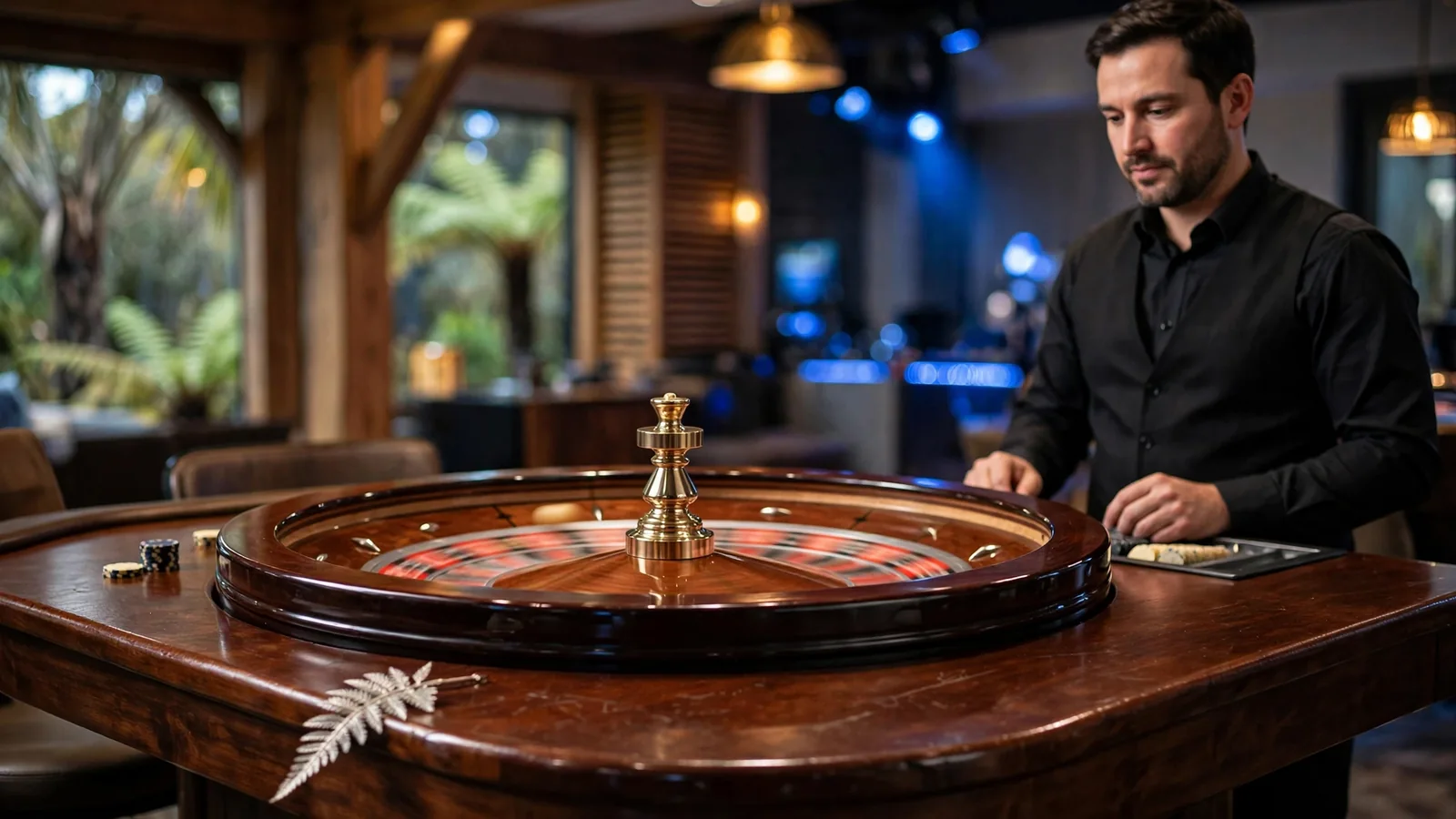
A live roulette table combines a physical wheel and dealer with an online viewing and betting interface. Before treating a table labelled Lightning Roulette as familiar, take time to see how its live screen is presented and what rules are displayed. A game’s name does not, by itself, tell you which wheel layout or table rules are in use. Read the table information rather than relying on a thumbnail, promotional description or remembered version.
Attention: A game’s name does not tell you which wheel layout or table rules are in use; always read the table information rather than relying on thumbnails or promotional descriptions.
Start with the wheel and the betting layout. Check which roulette variant the table identifies and whether the rules shown match that variant. A live stream may make the wheel easy to see, but the betting panel is still where you confirm the available choices and how they are labelled. Do not assume that every live roulette table uses the same layout simply because the interface looks familiar.
Pay attention to the distinction between the wheel and the betting table. Numbers appear in a particular sequence around the wheel, while the betting layout arranges choices for placing bets. Those are related views of the same game, but they are not interchangeable. Called bets are grouped by the positions of numbers on the wheel, not by where those numbers happen to appear on the table layout. If a called bet is offered, use the table’s explanation to understand the group it covers; do not work it out from the visual arrangement of the betting grid.
This matters when the interface presents named groups or lets you select them as a single option. A group name may refer to a section of the wheel rather than a row, column or nearby cluster on the betting layout. If the description is unclear, pause instead of assuming the selection means what it appears to mean. A clear view of the table is useful, but it does not replace the rules attached to the bet.
Watch how the live interface signals the stages of a round. Look for where the screen indicates that betting is open or closed, where the wheel result is shown, and how your selections are displayed. These are practical checks, not evidence that a particular feature changes the underlying roulette rules. If anything on the screen is hard to interpret, avoid placing a bet until you can identify what has been selected and what the table says will happen.
Live Table Checks
- Confirm the roulette variant and wheel layout in the table information.
- Verify how the betting panel identifies and confirms your selections.
- Review the explanation for any called-bet wheel-position groupings.
- Locate where the table displays its rules and spin results.
- Ensure you can follow the screen comfortably without rushing.
For a live Lightning Roulette table, avoid assuming that every provider or online casino presents the same version. Check the displayed game information and rules for the table you are viewing. A label or search description referring to a large multiplier, including “500x”, is not enough to establish how a specific live table works. Do not treat the number in a title or advertisement as a promise about a result, or as a reason to risk money. The relevant details are the rules presented for that table.
Before joining a live session, take a moment to check:
- The roulette variant and wheel layout named in the table information.
- How the betting panel identifies selections and confirms what you have placed.
- Whether any called-bet description explains its wheel-position grouping.
- Where the table displays its rules and the result of a spin.
- Whether you can follow the screen comfortably without rushing.
A dealer-led broadcast can feel more immediate than a static roulette screen, but the atmosphere does not make results predictable. Each spin remains uncertain, and every real-money bet can lose. Set a limit you can afford to lose before you begin, and do not increase it to recover an earlier loss. If you cannot tell what a selection covers or how the table works, stepping away is safer than guessing.
First Person Lightning Roulette: Separate the View from the Rules
“First Person” describes a way a roulette game may be presented, but the label alone does not tell you how its wheel, bets or special features work. First Person Lightning Roulette is listed as a game variant; that does not establish that its rules are identical to another Lightning Roulette version, or that the first-person presentation changes them. Treat the viewing angle and the game rules as separate things until the specific table’s information explains both.
A first-person view may make the game feel closer to the action, but a visual change is not proof of a mathematical change. Nor does a familiar title guarantee that every version has the same setup. Before relying on a description, look for the rules attached to the particular game: they should explain how a spin is settled and what applies to the bets offered. If the information does not make a feature clear, do not fill the gap with assumptions drawn from another roulette product.

The same caution applies to an advertised return-to-player figure. A number displayed beside a game is useful only when you know what game version and rules it refers to. The name “First Person Lightning Roulette” by itself cannot establish an RTP, and a general figure for roulette would not verify the return for this specific version. Avoid treating a title, thumbnail or short promotional description as a substitute for the game’s own rules and information.
A demo can show you how a particular interface looks and responds, but seeing a first-person presentation does not, by itself, confirm that the real-money version follows identical rules or has the same features. The label may appear across different listings, so check that the information relates to the exact version you are considering. A demo’s past outcomes are not evidence of what a later real-money session will produce.
Searches for sites offering this version, or for ways to pay by phone, are questions about access and payment rather than evidence about the roulette rules. A payment label does not establish the game’s mechanics, and a site listing does not verify its claims about the version, its return or its presentation. Keep those questions distinct: first identify what the particular game says about its rules, then assess any separate information about access or payment. Do not treat a result matching the wording you expected as confirmation that the game has been checked.
Descriptions such as “not on Gamstop” relate to separate schemes and do not provide information about the rules or reliability of a First Person Lightning Roulette variant.
Likewise, whether a site is described as “not on Gamstop” does not tell you whether a roulette variant has different rules. That phrase concerns a separate scheme, not the way a wheel outcome is determined. It should not be used as a shortcut for deciding whether the game description is complete or whether its claims about First Person Lightning Roulette are reliable.
Most importantly, a first-person view does not make roulette outcomes predictable. Each spin is independent: previous results do not alter the probability of outcomes on the next one. A sequence that looks unusual, or a run of results that appears to follow a pattern, cannot establish what the next spin will be. If you choose to play for money, remember that every bet can lose and do not risk more than you can afford to lose.
A Sensible Lightning Roulette Strategy Starts with the Odds
A staking system can change how you distribute bets and how quickly your balance rises or falls, but it cannot change the underlying advantage built into a roulette game. Increasing a stake after a loss does not make the next spin more likely to win. Nor does a run of wins make another win due. Each spin is independent, so previous results do not alter the probabilities on the next one.
That is the starting point for assessing claims about a winning Lightning Roulette strategy. A plan may help you follow a spending limit or avoid changing your decisions in response to a short run of results. It cannot guarantee profit or make the house edge disappear. Lightning-themed features should not be treated as a way to overcome the ordinary risks of roulette; a multiplier or a larger advertised payout is not proof that a staking method can beat the game.

The wheel rules matter more than the name of a betting system. Single-zero European Roulette has a house edge of 2.70%. French Roulette uses the same single-zero layout, but special rules can improve the position of eligible even-money outside bets when zero lands. With La Partage or En Prison in effect, the house edge for French Roulette falls to 1.35%. Those rules are why French Roulette offers better odds on even-money bets than standard single-zero play.
La Partage returns half of an eligible even-money stake when zero lands, while En Prison holds the bet for another spin. The benefit is limited to those even-money bets and depends on the table actually applying the rule. It is not a general reduction for every wager on the layout, and it does not turn a losing outcome into a guaranteed win. French tables with La Partage can therefore reduce the effective house edge for qualifying bets when zero appears, but the advantage is specific and conditional.
This distinction puts “beat the wheel” claims in perspective. A staking progression cannot reproduce the benefit of a rule that changes what happens to a bet after zero. If you are comparing roulette options, the relevant question is which wheel and rules are in use, not whether a system has a persuasive name. Even a lower house edge remains an edge for the house over time; it does not say what will happen to your next stake or session.
- Focus on the wheel variant and specific table rules.
- Use a plan to follow spending limits.
- Understand that the house maintains an edge over time.
- Rely on the persuasive name of a betting system.
- Assume a staking progression can beat the house edge.
- Mistake a lower house edge for a guaranteed win.
The Martingale is a familiar example of a progression that can look convincing after a loss: the player raises the next stake in an effort to recover. It does not alter the chance of the next spin, and a losing sequence can make the required stakes grow quickly. Other progressions have the same basic limitation: they rearrange exposure rather than changing the wheel’s probabilities.
Treat any proposed “best” system with care if it promises reliable returns or says a pattern can identify a favourable next spin. Roulette results are random, and every real-money bet can lose. Set a firm limit before play, do not risk more than you can afford to lose, and stop when that limit is reached. A sound approach is not a prediction of profit; it is an honest understanding of the rules and the risk you are accepting.
How to Play Without Treating a Win as Predictable
A roulette bet is a choice about which outcome you want to back, not a way to identify what the wheel will do. Depending on the table, you may be able to select a single number or place an outside bet such as red or black, odd or even. A narrower selection can feel more dramatic when it wins, but it does not make the next result more likely. Every real-money bet can lose.
Before confirming a wager, check which selection is highlighted and what the game screen shows as your stake. This matters when you are learning an unfamiliar interface: a click or tap may select a betting area rather than submit the bet, and the controls can vary between games. Read the table’s own instructions for how to place, adjust and remove a bet. Do not assume that a version labelled Lightning Roulette uses the same controls or special features as another roulette game.
There is no reliable way to win on demand. Roulette spins are independent, so a run of one colour, a particular number appearing recently, or a long gap since a result does not change the probability of the next spin. A record of past outcomes can describe what has already happened; it cannot tell you what to bet on next. Treating a pattern as a signal can lead you to stake more while relying on information that has no predictive power.
If you are deciding how to bet, choose a stake you can afford to lose before play begins and keep to it. Do not raise it to recover losses or because a result seems overdue. A smaller selection of outcomes may produce a more noticeable win when it lands, but it can also leave you with nothing on that spin. Broader bets may cover more outcomes, yet they still do not guarantee a return. No sequence of choices turns roulette into a predictable source of money.
Security Risk
Avoid installing unofficial tools or sharing account details with anyone promising a winning method, as claims of hacks may put your personal information at risk.
Searching for a way to cheat Lightning Roulette is a warning sign rather than a route to an advantage. Do not install unofficial tools, share account details with someone promising a winning method, or follow instructions that ask you to bypass the game’s normal controls. Claims of a hack or guaranteed prediction do not change the independence of spins and may put your account or personal information at risk.
If you are considering a phone app, establish whether it is an official option from the service you already use before downloading anything. A game’s appearance on a screen does not prove that an app is genuine, and an unofficial download can expose your device or information. You do not need an app to decide whether roulette is suitable for you; if the rules or controls are unclear, pause rather than placing a bet.
The practical aim is not to find a winning trick. It is to understand the selection you are making, know that the stake is at risk, and stop when continuing would mean spending more than you can afford to lose.
Free Online Play: What a Demo Can and Cannot Tell You
Free online play can help you get used to a roulette screen before deciding whether to risk money. You can explore where the betting controls are, how a round is presented and how the interface responds to your selections. That is useful for learning the layout; it is not a reason to assume that every version of Lightning Roulette works in the same way.

A demo may offer a no-cost way to interact with a game, but its availability and presentation depend on the site and the version shown. Treat what is on screen as a guide to that particular demonstration, not proof of the rules, features or payout terms of another game. If a display does not explain a rule clearly, do not fill in the gap by relying on what you saw elsewhere.
The word “free” also needs care. A demonstration is different from staking money, but a site may place free-play access alongside other content or account features. Read the page you are using and distinguish a practice mode from any offer that comes with conditions. Do not assume that a balance shown in a demo is cash, can be withdrawn, or represents a real-money result.
What a free-play session can show
You may be able to practise moving around the interface and understand how the game communicates a round. You can see which controls are available and whether the presentation is comfortable for you to follow. These are practical observations about the screen, not evidence that you have learned a way to predict outcomes.
Free play also cannot establish what a particular Lightning Roulette version will pay in real-money play. Check the paytable and rules displayed for the exact game you are considering, rather than relying on a demo, a description elsewhere or a result from a previous session. A payout figure describes terms for a game; it does not promise that a bet will win.
Attention: A free-play button is not an endorsement of the site and does not establish the rules or conditions that govern a separate real-money version.
The same caution applies when looking for somewhere to play online. A page offering a demo does not, by itself, establish what rules apply to a separate real-money version or what conditions govern access. Avoid treating a free-play button as an endorsement of the site or as reassurance about the risks of wagering.
Keep the decision separate from the demonstration
If you move from practice to real-money play, you are making a different decision. Roulette outcomes are random, and previous results do not change the probability of a future spin. Every real-money bet can lose, regardless of how familiar the interface feels. Do not risk more than you can afford to lose.
A demo is most useful when you keep its purpose modest: learn the controls and decide whether you understand the presentation. It cannot tell you what will happen next, establish that a particular payout will occur, or verify that another version follows identical rules. When the display and the stated terms do not match your understanding, pause rather than guessing.
Bonuses, Predictions and Tracking Claims: Read the Conditions
A Lightning Roulette bonus can look straightforward until you reach the terms attached to it. Operators in New Zealand may set rules covering who is eligible, how much wagering is required, when the offer expires, which games contribute towards wagering and what happens if you request a withdrawal. Read those conditions before accepting an offer, not after a balance has been split between cash and bonus funds.
Bonus money must be wagered 50 times within 30 days. Winnings from free spins must be wagered 50 times within 7 days. These are separate requirements, so check which one applies to the offer you are considering. Also look for any game-contribution terms: a game may count differently towards a wagering requirement, or may not count at all. Do not assume that placing roulette bets will clear a casino-wide requirement at the same rate as other games.
A withdrawal request voids all active or pending bonuses. That can affect bonus funds and any offer that has not yet been completed, so check the withdrawal clause before accepting a promotion or beginning to wager. Expiry rules matter too: if the stated period ends before you meet the conditions, the remaining bonus may no longer be available. If a term is unclear, pause rather than relying on an assumption about how the offer will be applied.
Payment method and bonus eligibility are separate questions. If you are considering using Bitcoin, check whether the operator’s terms allow that method and whether the offer has payment-specific exclusions. A payment option does not change the wagering, expiry or withdrawal conditions. Do not treat a promotion as extra value until you know what you would have to do to retain it.
Tracking tools and prediction services need a different kind of caution. A tracker can record past results or display patterns in a history table, but a sequence of previous outcomes does not change the probability of a future roulette result. Spins are independent. A predictor that presents a number or colour as the next likely result cannot make that outcome more certain, even if its recommendation is based on recorded play.
Tracking tools and predictors only record past results; because spins are independent, no historical pattern can make a future outcome more certain.
The same applies to claims that a tracking system can identify a winning pattern or recover losses. A chart may describe what has already happened; it cannot establish what the next spin will be. Treat claims of guaranteed predictions, or of a method that turns recorded results into reliable future picks, as unsupported. Do not increase a stake because a tracker suggests a result is “due.”
Promotions and prediction tools can both make play feel more controlled than it is. Keep the bonus conditions separate from any betting decision, and do not risk more than you can afford to lose.
What Roulette Results and Statistics Can Actually Show
A results history can show which numbers appeared in recorded spins. Statistics can summarise those observations, while payout percentages and house-edge figures describe the mathematical terms associated with a roulette layout. These measures answer different questions: a record describes past play; a theoretical figure describes expected return across repeated play. Neither tells you what the next spin will produce.
A specialist roulette review gives European Roulette a payout percentage of 97.30% and American Roulette 94.70%. These figures correspond to their stated house edges: 2.70% for the single-zero European wheel and 5.26% for the American wheel, which has both a single zero and a double zero. The payout percentage is the proportion of stakes theoretically returned over a large volume of play, not a promise about what an individual player will receive. Short-term results can differ sharply from that long-run measure.

The distinction matters when you read figures labelled as Lightning Roulette statistics. A table of recent results may be useful for checking what has been recorded, but it cannot show that a number is becoming more likely. Roulette spins are independent: previous outcomes do not alter the probability of outcomes on later spins. A run of repeated colours or numbers is a feature of the record, not evidence that the wheel is due to change direction.
The name Lightning Roulette can also lead to confusion with a slot. It is a roulette game variant, so slot-style statistics should not be assumed to describe it. Treat any displayed figures as meaningful only when their scope is clear: which game and wheel they refer to, what period or sample they cover, and whether they are observed results or a theoretical payout measure. A results screen alone does not establish a game’s overall return.
A specialist roulette review also reports a payout percentage range of 92.86% to 96.19% for 100/1 Roulette. That range should be read as a figure attached to that particular review, not as a universal value for every version or operator. Labels and rules matter when comparing figures; a percentage without that context can mislead.
When you look at Lightning Roulette results, use them as a record, not a forecast. Statistics can help you understand past outcomes or compare stated theoretical figures. They cannot turn a random sequence into a dependable prediction, and no past result makes a real-money bet safe from loss.
Roulette Statistics
- Past results describe what happened but cannot forecast the next spin.
- Payout percentages are theoretical long-run measures, not individual promises.
- Roulette spins are independent, regardless of repeated colors or numbers.
- Statistics are meaningful only when the specific game and wheel are clear.
Trying a Lightning Roulette Demo Before Risking Money
A demo can help you become familiar with the basic flow of a roulette game before you decide whether to risk money. You can see where the betting controls are, how selections appear on the table and how a round progresses. That practical orientation may make the interface easier to follow, but it is not a test of whether you will win.
Treat a Lightning Roulette demo as a way to explore the version in front of you, not as proof of how every real-money game works. A demo may show a particular design or set of features; what you see does not establish that another version uses the same rules or presentation. Nor do demo results verify the odds you would face when wagering real money.
Pay attention to what the practice setting lets you do. You might use it to learn how to select and remove a bet, read the displayed result and find the game’s instructions. If a control or rule is unclear, pause and look for an explanation rather than assuming it works as it appears to. Do not infer that a feature is available in every Lightning Roulette game simply because it appears in one demo.
The outcomes in a demo are not a forecast. Roulette spins are independent, so a run of wins or losses in practice does not make a particular result more likely on a later spin. A demo also cannot show what losing real money would feel like for you. When money is involved, every bet can lose, and you should not risk more than you can afford to lose.
It is reasonable to stop at practice play if your aim is only to understand the interface. If you are considering wagering, make that decision separately from any excitement created by demo results. Familiarity with the controls can help you avoid confusion; it cannot make an uncertain outcome predictable or remove the financial risk.

Online Roulette in New Zealand in 2026: The Regulatory Context
New Zealand’s online-casino rules are changing during 2026. The Online Casino Gambling Act 2026 took effect on 1 May, creating the country’s first domestic licensing system for online casino gambling. The framework does not make online casinos based in New Zealand permissible under the Gambling Act 2003; instead, it sets out how online casino providers may be licensed.
The transition has a defined end point. Providers that were already serving people in New Zealand before the new Act began may continue operating until 1 December 2026, subject to the Act’s transitional provisions. The full licensing regime is not expected to be operating until 2027. Providers that have not applied for a licence must stop conducting online casino gambling in New Zealand by 1 December 2026. Unlicensed operation is expected to become an offence around mid-2027.
The Department of Internal Affairs is New Zealand’s primary gambling regulator and oversees regulation of the online-casino licensing framework. The Gambling Commission has a distinct licensing role: it hears and decides casino licence applications, issues online casino licences, and approves changes to licence conditions. These responsibilities concern the regulatory system as a whole, not the rules of a particular roulette game.
For someone looking into Lightning Roulette online, the key point is that the word “online” does not by itself establish a provider’s licensing status or the protections that apply. During the transition, the system is still being introduced, and the date a provider began operating matters under the transitional provisions. The rules also do not turn every online casino into a New Zealand-based or locally licensed business. Keep the distinction between the game and the legal status of the service clear, and do not treat a game name or website claim as confirmation of regulatory approval.
Prepared by the Casino Payment Info NZ editorial staff.