French Roulette in New Zealand: Rules and Odds
 Available in US
A guide to French roulette’s table features, betting options, zero and odds, with free play as a way to learn the interface.
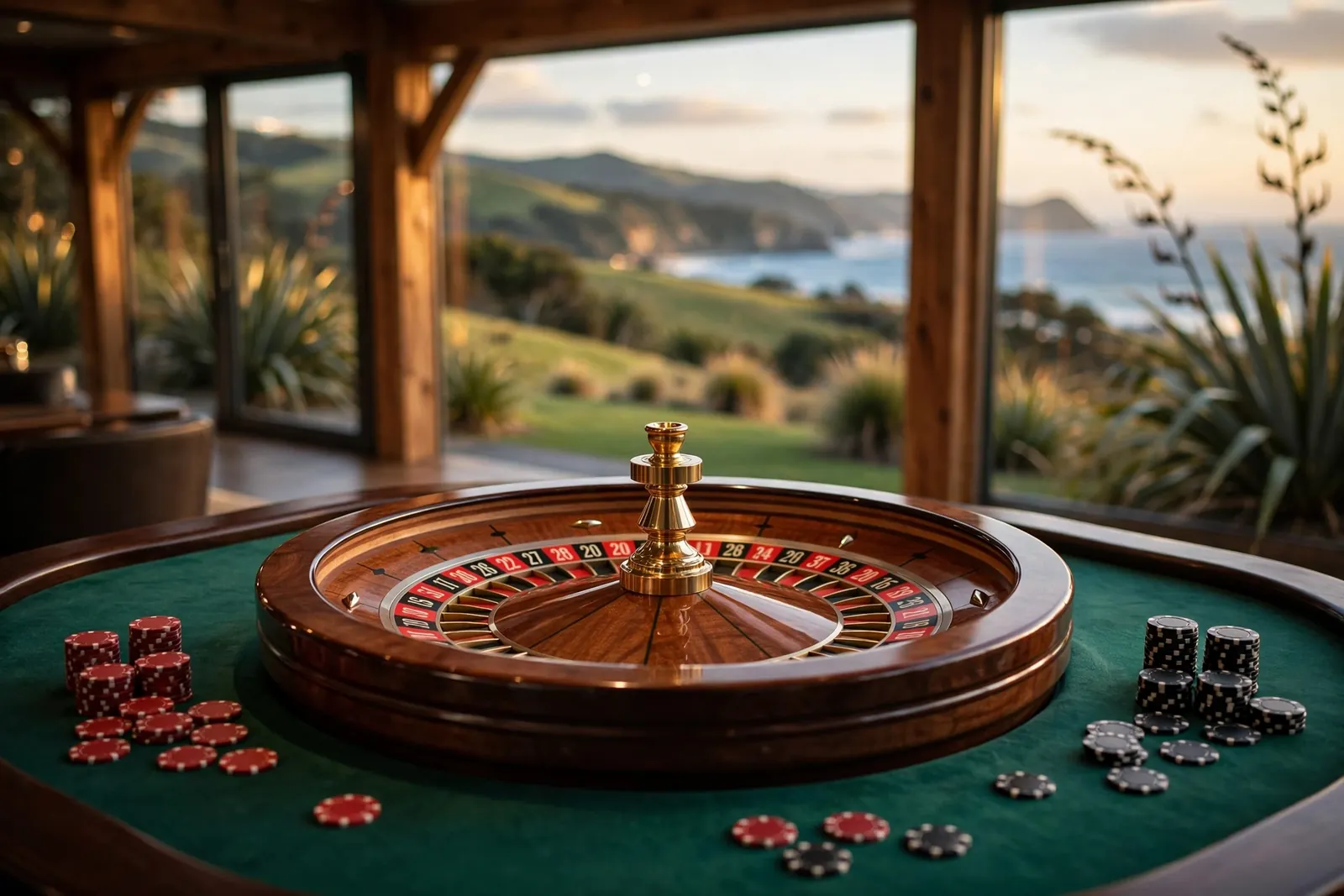
Table of Contents
- Try the Rules in Free Play Before You Risk a Stake
- What to Check Before Playing Online in New Zealand
- How a Live French Roulette Table Works
- How to Place French Bets and What Zero Changes
- French Roulette Odds, Probability and Sensible Strategy
- French vs American Roulette: The Difference a Zero Makes
- Payouts and Playing for Fun: Keep the Numbers in Context
- Called Bets, Dealer Calls and Reading the Wheel
- French Roulette Calls, Casinos and the Blackjack Comparison
- French Roulette Gold and Other Live-Game Labels
Try the Rules in Free Play Before You Risk a Stake
A free-play version of French roulette can give you room to learn the game’s interface before you decide whether you understand it well enough to play for money. In a demo, you can explore the available choices, see how a round progresses and correct a mistaken click without losing a stake. Treat it as a way to practise using the game, not as a way to discover what the wheel will do next.
The word roulette is French and means “little wheel”. In French roulette, the name refers to the familiar casino game, but a free version may not reproduce every table’s rules or presentation. Before practising, look for the game’s own help panel or information about its settings. That lets you see what the demo is showing rather than assuming that every game labelled French roulette works identically.
Use a demo to learn the interface
Start by taking a moment to identify the controls. Find where the game shows the current round, how you select a betting option, and how you confirm or clear a choice. If the screen offers a practice balance, remember that it is not real money. Its purpose is to let you test the controls and understand the sequence of actions.
If you’re looking at French roulette options in New Zealand in 2026, use this list as a starting point for checking the details that matter to you. The available information varies by operator, so confirm any game and account terms directly before you play.
Payout speed: 1-3 business days The stated payout speed is 1–3 business days. You can use that as a practical detail to check against your expectations.
License: 07017519840 · Payout speed: 1-3 business days The listed licence number is 07017519840, and the stated payout speed is 1–3 business days. You can consider both details when assessing the operator.
Payout speed: 1-3 business days The stated payout speed is 1–3 business days. You can factor this into your review of the operator.
License: Tobique Gaming Commission, licence no. 0000002 The listed regulator is the Tobique Gaming Commission, with licence no. 0000002. You can use this information as one point of reference when checking the operator.
License: Tobique Gaming Commission, licence no. 0000064 The listed regulator is the Tobique Gaming Commission, with licence no. 0000064. You can take these licensing details into account when reviewing the operator.
License: Malta Gaming Authority, licence no. MGA/B2C/394/2017 The listed regulator is the Malta Gaming Authority, with licence no. MGA/B2C/394/2017. You can use the stated licence details as part of your checks.
License: Curaçao Gaming Authority, licence no. OGL/2024/165/0185 The listed regulator is the Curaçao Gaming Authority, with licence no. OGL/2024/165/0185. You can refer to these details when assessing the operator.
License: Tobique Gaming Commission, licence no. 0000091 The listed regulator is the Tobique Gaming Commission, with licence no. 0000091. You can include this information in your review.
License: Malta Gaming Authority, licence no. MGA/B2C/370/2017 The listed regulator is the Malta Gaming Authority, with licence no. MGA/B2C/370/2017. You can use the licence details as one factor in your checks.
You might try selecting a choice, removing it, and making another selection before starting a round. Notice which parts of the screen respond to a click and whether the game gives you a clear indication of what you have chosen. If you are using a phone, check that you can distinguish the controls on its smaller display. These small checks can prevent confusion later, when a real stake would be involved.
A demo can also help you become comfortable with the pace of a game. You can pause between rounds, read the on-screen prompts and return to the rules when something is unclear. There is no need to hurry through practice. If the interface feels confusing, that is useful information: you can stop and review it without having placed a real bet.
Practise understanding your choices
Use free French roulette to learn what the game lets you select and how it displays those selections. If you are unfamiliar with the layout, focus on reading the labels and checking that the game registers your choice as intended. The aim is not to cover as many options as possible or to build a method for predicting results. It is simply to understand what you are choosing before any money is at stake.
If the demo includes a rules section, read it rather than relying on the game’s title alone. A label can tell you the broad type of game, but the information displayed within the game is what helps you understand the specific version in front of you. For instance, check whether the rules describe the same features you expected to practise. When something is not clear, do not assume that a familiar-looking screen answers the question.

Free online French roulette can be useful for learning where controls are and how a round is presented. It cannot tell you whether a real-money game will have the same interface, settings or pace. Nor does a run of practice results provide a reliable guide to what will happen in a later session. The demo is a practice environment, not a forecast.
Keep practice separate from prediction
Roulette spins are independent. Earlier results do not alter the probability of outcomes on future spins. A sequence that appears to follow a pattern in free play does not make a particular result due, and repeated practice cannot reveal what the next spin will bring. The same is true if your demo results seem to favour one choice for a while: that history does not make it more likely to win next time.
This distinction matters because a free session can feel informative. You may become more confident clicking through the game, but familiarity with the controls is not an advantage over the randomness of the wheel. It can reduce uncertainty about how to use the interface; it cannot remove uncertainty about the result.
If you are comparing a free French roulette game with another version, compare the displayed rules and controls rather than judging by a short sequence of outcomes. A demo can help you notice what is different in the presentation, but the results you see are not evidence that one choice will perform better in a future session.
- Identify the game controls and interface
- Read the game’s own help panel
- Practise making and clearing selections
- Treat demo results as a forecast
- Assume all French roulette games are identical
- Use practice to discover wheel patterns
Free play is most useful when you set a simple purpose before opening it: understand the screen, find the instructions, and practise making or clearing a selection. When you have done that, you can leave the demo. There is no need to keep playing until a particular result appears or to treat a practice balance as money you have earned.
If you later choose to play for real money, remember that every real-money bet can lose. Do not risk more than you can afford to lose, and do not let confidence with the controls become confidence that you can predict the wheel. Free practice can prepare you to use a game; it cannot make future results safer or more certain.
What to Check Before Playing Online in New Zealand
Before opening an online French roulette table, check which rules apply to the operator and what its terms say. New Zealand’s position is changing during 2026, so a statement about licensing may depend on when it was written. The domestic licensing system is new; it should not be confused with the earlier arrangement for websites operating from overseas.
The Online Casino Gambling Act 2026 took effect on 1 May 2026 and created New Zealand’s first domestic licensing system for online casino gambling. The Department of Internal Affairs is the primary gambling regulator and oversees the online casino licensing framework. The Gambling Commission hears casino licensing applications, issues online casino licences and approves changes to licence conditions.

The transition has a defined end date. Providers that were already serving people in New Zealand before the Act took effect may continue until 1 December 2026, subject to the Act’s transitional provisions. The full licensed regime is not expected to be operating until 2027. Providers that have not applied for a licence must stop providing online casino gambling in New Zealand by 1 December 2026. The law also restricts domestic online casinos: the earlier Gambling Act 2003 did not permit online casinos to be based in New Zealand.
This matters when assessing a site described as a New Zealand casino. Before the 2026 law, online gambling supplied from outside the country was not licensed or supervised by a New Zealand regulator, and customers had no domestic government recourse. Offshore sites can be accessible, but that does not mean they are covered by New Zealand’s domestic protections. The new regime is being introduced in stages, so do not assume that a familiar site’s past availability proves its present status or future eligibility.
Read the operator’s terms before making a deposit or accepting a promotion. Bonus offers can come with eligibility conditions, wagering requirements, expiry rules, restrictions on which games contribute, and limits or other conditions on withdrawals. These are account and promotion terms, not rules of French roulette.
For the bonus conditions relevant here, bonus money must be wagered 50X within 30 days. Winnings from free spins must be wagered 50 times within 7 days. A withdrawal request voids all active or pending bonuses. Check how the operator defines qualifying play and whether a particular game contributes before opting in; do not assume roulette play will count in the same way as other games. If the conditions are unclear, leaving the offer unclaimed avoids having to meet terms you did not intend to accept.
Legal Status
Providers that have not applied for a licence must stop providing online casino gambling in New Zealand by 1 December 2026.
Also read the withdrawal provisions before playing with real money. A promotion can affect whether a withdrawal is allowed while its conditions remain active, and requesting a withdrawal can cancel active or pending bonuses. Keep the offer’s terms available so you can compare them with the account conditions shown after acceptance. If the site changes its terms, check the current wording rather than relying on an older description.
A careful check cannot remove the uncertainty involved in online gambling, but it can help you understand who oversees the licensing system, what transition rules apply and what you are agreeing to. Take time to review the current legal position and the operator’s terms before playing, and do not risk money you cannot afford to lose.
How a Live French Roulette Table Works
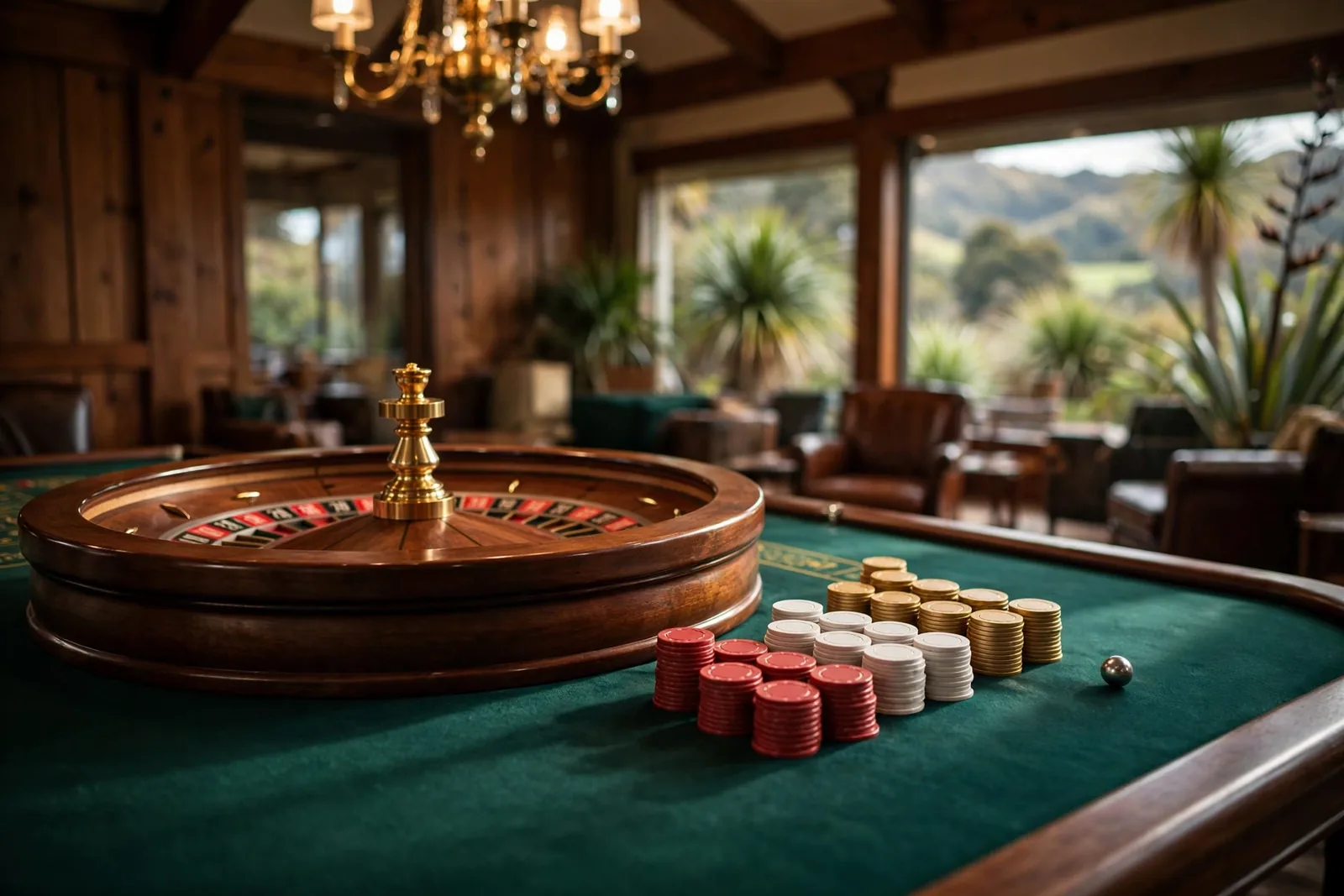
A French roulette table brings together two layouts that are easy to confuse: the numbered pockets around the wheel and the betting area displayed on the table. The wheel uses a single zero, as does European Roulette. French Roulette adds rules such as La Partage and En Prison, but the wheel itself follows the same single-zero layout.
In a live game, the wheel is the physical centre of attention. The dealer spins it and releases the ball, while the table layout gives you a separate place to select or observe bets. If you are watching online, the stream may show the wheel, the dealer and the betting area together, but those are still different parts of the game. The position of a number on the betting layout does not tell you where that number sits around the wheel.
That distinction matters when you hear a dealer call a group of numbers. Called bets refer to numbers grouped by their positions on the wheel, not by where their boxes appear on the table layout. So a group described in relation to the wheel is not simply a row, column or neighbouring set on the betting area. Keeping the two arrangements separate makes it easier to follow the call without treating it as a layout-based bet.

A French roulette layout may look different from a European table in its labels or presentation, but the single-zero wheel is the useful point of comparison. When assessing a live French roulette game, look for the wheel shown in the game and the rules displayed for that table. The title alone does not explain every feature. The wheel layout and the table’s stated rules tell you more than a general label can.
Online versions can present the game in different ways. A live table may show a dealer and physical wheel, while an automated format may present the wheel without the same dealer-led view. Do not assume that every game described as live uses an identical setup, or that an automated table has the same visual presentation as a streamed one. Check what is actually shown before you begin, especially if seeing the wheel clearly is important to you.
The same care applies when you open a French roulette game on a desktop or another device. The screen may arrange the wheel and betting area differently, and labels can be less visible on a smaller display. Take a moment to locate the zero pocket, the table layout and the rules panel. If a called group is being discussed, follow the wheel positions rather than trying to trace the group across the betting grid.
French roulette online is therefore best understood as a single-zero wheel game with a separate table interface and French-specific rules attached to some tables. The live presentation can help you see the wheel and hear calls, but it does not change what those calls refer to. Read the table information and distinguish wheel position from layout position before relying on what you see or hear.
How to Place French Bets and What Zero Changes
To learn how French roulette bets are settled, start with the even-money outside bets: red or black, odd or even, and low or high. These choices cover broad groups of numbers on the betting layout. A winning even-money bet returns an amount equal to your stake, in addition to returning the stake itself. The special French rules matter only if you have one of these bets in play and the ball lands on zero.
That qualification is important. La Partage and En Prison do not change how every roulette wager works, and they do not apply to inside bets such as a wager on one number. They are rules for eligible even-money outside bets when zero appears. Check the table rules before placing a stake, because the name “French roulette” alone does not tell you which zero rule that particular table uses.
What happens under La Partage
With La Partage, zero does not make you lose the whole stake on an eligible even-money bet. The casino returns half of it and keeps the other half. For instance, if your red bet is still active when zero lands, half of that stake comes back; the remainder is collected. The rule applies whether your selection was a colour, an odd-or-even group, or a low-or-high group, provided the wager qualifies as an even-money outside bet.
The effect is immediate: after the zero result, you have only half the original stake returned, rather than the whole stake being lost. It is not a win, and the returned portion does not produce winnings. If you have several wagers on the layout, do not assume that all of them qualify. The rule is limited to eligible even-money outside bets.
What happens under En Prison
En Prison handles the same kind of bet differently. When zero lands, an eligible even-money outside wager is held for the next spin instead of being settled as an immediate loss. The stake remains in play, but you cannot treat it as money already returned to your balance.
If the next spin favours your original selection, the stake is returned without additional winnings. If the next spin does not favour it, the stake is collected. In other words, a winning follow-up does not pay the normal even-money profit on top of the original stake: it releases the stake only. The bet is carried forward once under the stated rule; its outcome depends on that next spin.
This distinction makes the two terms easier to remember. La Partage splits the stake when zero lands. En Prison keeps the stake pending and uses the next spin to determine whether it is returned or collected. Neither rule turns zero into a regular win, and neither changes the settlement of bets outside the eligible category.
The casino returns half of the stake on an eligible even-money bet when zero lands, while keeping the other half.
An eligible even-money bet is held for the next spin; the stake is returned if the next spin wins, otherwise it is collected.
Before you place a bet
If the table uses French labels, learn what they mean before committing money. “La Partage” refers to the half-stake return after zero; “En Prison” refers to holding the wager for the next spin. These translations describe the practical difference, not a separate type of bet. The wager itself is still your chosen outside selection.
For a clear first real-money decision, confirm three things on the table: that the selection is an even-money outside bet, which zero rule applies, and what happens to the stake after zero. If the rule is not displayed clearly, do not guess. A table can use a single-zero wheel while presenting different settlement conditions, so the wheel label is not a substitute for reading the rules.
There is no staking pattern that makes a future spin certain to favour your selection. French rules alter what happens to an eligible stake when zero lands; they do not remove the possibility of losing it. Set a limit you can afford to lose, and stop when reaching it would affect money needed elsewhere.
French Roulette Odds, Probability and Sensible Strategy
The stated house edge for French Roulette is 1.35% when La Partage or En Prison applies. That figure describes the game’s long-run mathematical advantage for the house under those rules; it is not a forecast of what will happen during your session. A player can win or lose over a short run, and every real-money bet can lose.
The reduced edge is tied to the zero rules, not to every wager on the table. La Partage applies to eligible even-money outside bets when zero appears, returning part of the stake rather than treating the whole bet as lost. This lowers the effective house edge on those bets. It does not make them certain to win, nor does it extend the same treatment to other bet types. En Prison also changes the result of an eligible even-money bet after zero, but the 1.35% figure applies when that rule or La Partage is in force.
Before you play at a French Roulette table, check which rule it actually uses and which bets qualify. The name alone does not tell you how a particular table settles zero. If the table’s rules do not state that La Partage or En Prison applies, do not assume the lower house edge is available.
What probability can—and cannot—tell you
A lower house edge can make French Roulette more favourable to a player than a version without these zero rules, on the bets they cover. It does not change the underlying uncertainty of a spin. Roulette spins are independent: a run of one colour, number or result does not make another outcome more or less likely on the next spin.
That is the limit of useful probability in a session. Past results can describe what has already happened, but they cannot provide a reliable signal for what comes next. A display of recent outcomes may be interesting to look at; it is not a prediction tool.
Keep strategy within those limits
A sensible French Roulette strategy starts with selecting a table whose rules you understand, then deciding what you can afford to lose before staking. Choose bets for their format and the way you want to play, not because a sequence of recent results appears to point toward a coming win.
Attention No staking system removes the house edge, and increasing a stake to recover losses can expose you to further losses without changing the chance of the next result.
Changing stake sizes after wins or losses does not alter the odds of future spins. No staking system removes the house edge, and increasing a stake to recover losses can expose you to further losses without changing the chance of the next result. The same is true of any strategy built around waiting for a particular outcome: the wheel does not remember previous spins.
Treat the 1.35% edge as a mathematical feature of the stated rules, not a promise of a return or a reason to extend a session. Set a firm spending limit, stop when you reach it, and never risk money you cannot afford to lose.
French vs American Roulette: The Difference a Zero Makes
The key distinction between French and American roulette is the wheel, not the name on the table. French Roulette uses the single-zero layout shared with European Roulette. American Roulette adds a double zero, creating an extra pocket and changing the house edge.
A European wheel has 37 pockets: one zero and the numbered pockets. Its house edge is 2.70%. An American wheel has 38 pockets, with both a single zero and a double zero, and its house edge is 5.26%. The additional pocket matters because it gives the casino another outcome that does not belong to the ordinary winning number groups. The wheel’s composition, rather than a different way of spinning or choosing numbers, accounts for the gap.
This is why comparing French and American roulette is useful before you sit down. A French table may look familiar to anyone who has seen a European wheel, while an American table’s extra zero changes the underlying odds. If you are choosing between them, check the wheel and the stated rules rather than relying on a broad game label. The French name alone does not mean that a table has every special rule associated with French play; the rules displayed for that specific table matter.
There is a qualified exception worth knowing about. A specialist review reports that some American roulette tables in Atlantic City return half the stake on even-money bets when either zero appears. That is a feature of some tables, not a standard part of American Roulette, so do not assume it applies at another table or in another location. Check the rules shown for the game before staking money.
The lower house edge on a single-zero wheel does not make outcomes predictable. Each spin remains random, and a previous result does not change what can happen next. No betting pattern can remove the house edge, and every real-money bet can lose. If you choose to play, do not risk more than you can afford to lose.
Payouts and Playing for Fun: Keep the Numbers in Context
A payout percentage is a way to compare a game’s stated long-run return with the amount wagered across play. It is not a promise about what you will receive in a particular session. A short run can end well above or below that figure, and every real-money bet can lose.
A specialist roulette review lists the payout percentage for European roulette as 97.30% and American roulette as 94.70%. The same review gives 100/1 roulette a range of 92.86% to 96.19%. These are published figures to read as comparisons, not as forecasts for your next visit to a table.

For French roulette, the headline payout figure needs context. French roulette uses a single-zero wheel like European roulette, while its special treatment of zero can affect eligible even-money bets. So a broad European roulette percentage does not, by itself, describe every French table’s rules or the return on every type of bet. Check the table information before relying on a figure, and distinguish its stated payout percentage from the rules that apply to your wager.
If you choose to play French roulette for fun, set a spending limit before you start and treat any stake as money you may lose. A payout percentage cannot tell you whether a session will finish ahead, nor can it make a particular result more likely. Roulette outcomes are random; earlier spins do not change the probability of a future one.
This distinction matters when comparing games. The quoted percentage can help you understand how a game is presented over the long run, but it is not a personal return rate or a target you can expect to reach. A session may end before any long-run pattern is meaningful, and a player can lose despite choosing a game with a higher published payout percentage.
Use the figure as one piece of information, alongside the table’s rules and your own budget. If the numbers make a game look more reassuring than it feels, pause rather than increasing your stake to try to match an expected return. Playing for entertainment means being comfortable with the possibility that the money set aside will not come back.
Called Bets, Dealer Calls and Reading the Wheel
In French roulette, a dealer’s call can refer to a group of numbers arranged next to one another around the wheel. That grouping is based on wheel positions, not on where the numbers happen to sit on the betting layout. The distinction matters: a call describes a wheel-based section, while the table is the place where bets are displayed and selected.
This can be confusing when you are watching a live table. The layout presents numbers in rows and columns, but the wheel follows a different order. A group that appears scattered across the layout may form a connected stretch around the wheel. So if a dealer announces a call, do not assume it means a row, column or other area on the table.
A useful way to follow the call is to look for the table’s wheel diagram or on-screen explanation, if one is provided. Check the group against the wheel positions shown there rather than trying to infer it from the number grid. If the interface does not make the grouping clear, pause and read its help panel before acting. A call is terminology for a wheel-based grouping; it does not change the underlying arrangement of the table.
French roulette uses a single-zero wheel, as European roulette does, with additional rules that distinguish the French version. But “French roulette” alone does not tell you which calls a particular table offers or how its interface presents them. Read the table information and pay attention to the dealer’s wording, especially when moving between different games.
Dealer calls are not a prediction of what will land. They identify positions or groups on the wheel; they do not make those numbers more likely to appear. Roulette outcomes are random, and previous spins do not determine the next one. Every real-money bet can lose, so do not risk more than you can afford to lose.
Before placing a bet
- Confirm the selection is an even-money outside bet
- Identify which zero rule applies to the table
- Determine what happens to the stake after zero
- Match spoken dealer calls with the wheel display
If you are new to calls, take time to match the spoken announcement with the wheel display before placing anything. That small pause can help prevent a common misunderstanding: treating a wheel grouping as though it were a familiar patch of the betting layout. Once you keep those two reference points separate, dealer announcements are easier to follow without mistaking their meaning.
French Roulette Calls, Casinos and the Blackjack Comparison
At a French roulette table, a dealer’s call identifies a particular group of wheel numbers. It is a way to name a selection, not a separate game or a promise about which numbers will come up. If you are following a call, check the table’s explanation of its terms and how the selection is entered; the wording may be unfamiliar even when the underlying bet is clear.
The table’s rules matter more than the call itself. La Partage is exclusive to French roulette, and French roulette also offers En Prison. These rules give even-money bets their distinctive treatment when zero appears, which is why French roulette offers the best odds for those bets. That advantage is limited to eligible even-money wagers; it does not make other bet types safer or make a particular call more likely to win.
When comparing tables at online casinos, do not rely on the game title alone. Read the displayed rules and confirm whether La Partage or En Prison is in force for the table you intend to use. A French label without the rule details is not enough to establish how a zero will affect your stake. Calls and table names can help identify the format, but the written rules determine settlement.
The comparison between French roulette and blackjack needs the same care. There is no sound basis for declaring one of them the game with the smaller edge in every case. French roulette’s advantage for even-money bets depends on the stated zero rule, while a blackjack comparison depends on the particular game rules and how it is played. Without matching those conditions, a simple ranking could mislead you.
Treat calls as descriptions of bet groups, not as a system for improving the odds. A dealer’s wording does not change the random nature of the next spin, and previous results do not make a called group due. If you play for money, set a limit you can afford to lose and keep in mind that any bet can lose.
French Roulette Gold and Other Live-Game Labels
A title such as French Roulette Gold Live can sound like a precise description of the table, but the name alone does not establish which rules are in force. Treat “Gold” as part of the product label, not as proof of a particular wheel, dealer format or bonus feature. The table information is what matters.
Start by checking the stated wheel. French Roulette has one zero, matching the pocket count and wheel structure of European Roulette. Its distinction lies in rules that can include La Partage or En Prison. A live table carrying a French label may not necessarily offer every rule associated with the variant, so look for the rules shown for that specific game before joining.
Check the rule panel or table details rather than relying on a thumbnail, lobby description or the word “French” in the title. Confirm that the wheel is single-zero and read whether the table states that La Partage or En Prison applies. If the information is unclear, do not assume the more favourable rule is available; choose a table whose terms are explicit or ask the operator for clarification.
The same care applies to other branded live-game names. A gold, deluxe or premium tag may distinguish a presentation or product version, but it does not by itself tell you how the game settles bets. Dealer video and studio styling are separate from the rules governing the wheel. Keep those questions apart when comparing tables.
Before staking money, make sure the displayed rules match what you intend to play. This small check can prevent a mismatch between the game you thought you selected and the one actually offered. It cannot make outcomes predictable: roulette spins remain random, and any real-money bet can lose. Do not risk more than you can afford to lose.
Published by the Casino Payment Info NZ team.